How Many Days in Kyoto: Two, Three or Five
Three nights in Kyoto is the number that works for most first visits. Two nights, the standard allocation on a ten-day Japan package, is a sprint between the famous sites at the hours everyone else is there. Five nights lets you cover the same ground at the edges of the day and add Nara or Uji without a 06:00 start. This note sets out what each length realistically covers, how operators allocate Kyoto nights, what it costs to move around and sleep, and how to read a package's Kyoto block before you pay. Transport fares are from the Kyoto City transport bureau and the accommodation tax from the city's official notice, checked October 10, 2026.
Two nights covers the headline sites at the busiest hours
Two nights gives one full day and two half days, which is what most escorted packages provide. Our Kyoto checklist describes the standard version: Kinkaku-ji, Fushimi Inari, Kiyomizu-dera and either Arashiyama or Gion, by coach, between roughly 09:00 and 17:00.
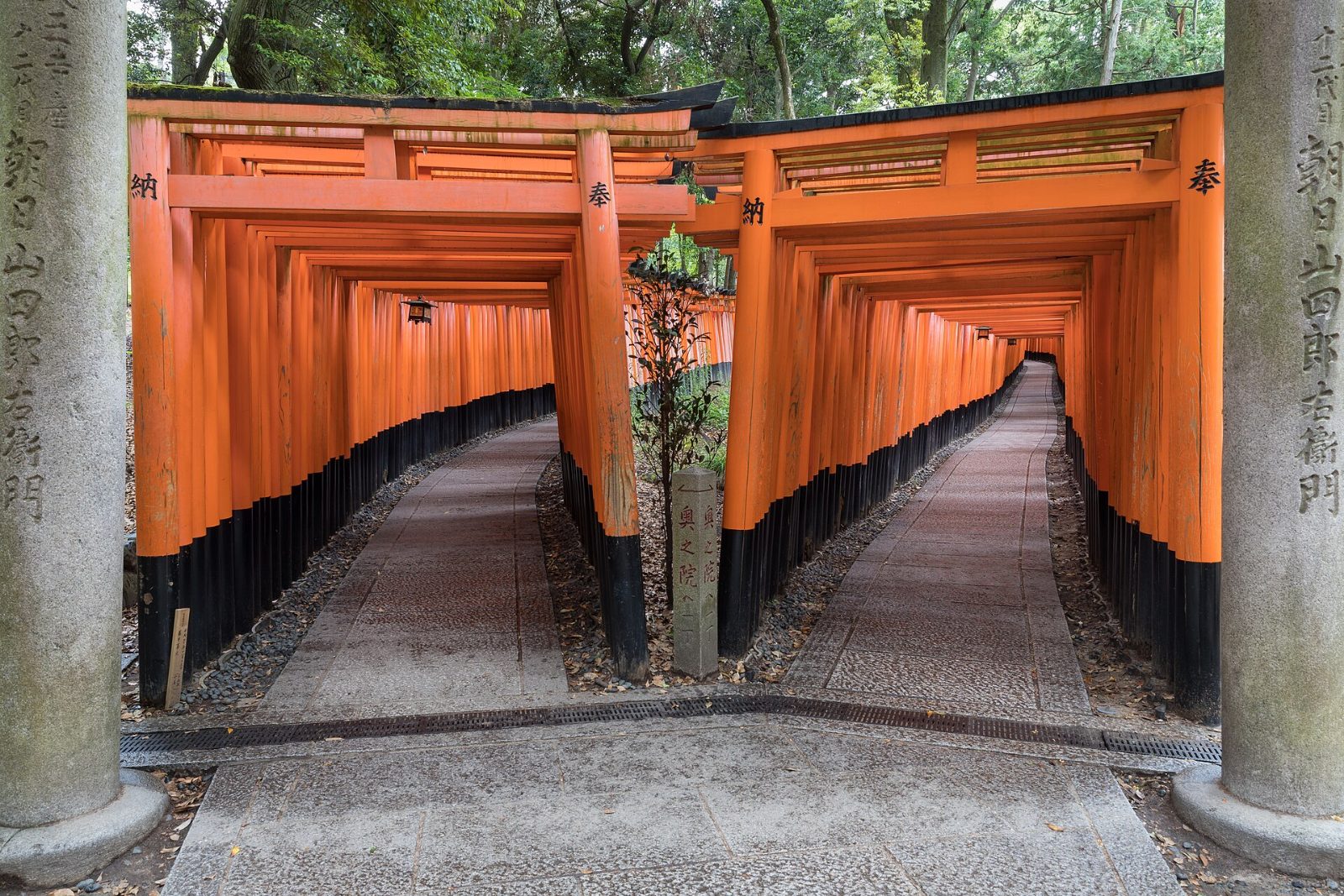
The limitation is not the number of sites, it is the timing. A coach that leaves the hotel after breakfast arrives at Fushimi Inari with every other coach. The torii gates are still there; the photograph without a crowd in it is not.
Three nights is the first length that allows early mornings
With two full days, one can be built around a dawn start. Fushimi Inari's paths are open round the clock and Arashiyama's bamboo grove is a public path, so a 06:30 walk in either costs nothing and avoids the crowds entirely. Temples with gates generally open mid-morning; check the specific site before planning around it.
A workable three-night shape, ours rather than any operator's, is: day one east, from Kiyomizu-dera down through Higashiyama to Gion; day two south and west, Fushimi Inari at dawn then Arashiyama; day three north, Kinkaku-ji and Ryoan-ji, with the afternoon unplanned.
This is also the minimum length at which a self-guided package starts to beat an escorted one on experience, because the escorted group's fixed timing is the thing a third night buys you out of. The package versus DIY checklist covers the trade.
Five nights adds Nara, Uji and a rest day without penalty
Nara is under an hour from Kyoto by rail and is normally sold as a full-day optional on packages. Uji, for Byodo-in and tea, is closer still. With five nights both fit without touching the Kyoto days, and a fifth day with nothing booked stops being a waste and becomes the point.
- Two nights: one full day, the big four sites by coach, no early mornings. Standard on 10 to 12 day escorted packages.
- Three nights: two full days, one dawn start, one unplanned afternoon. Our recommendation for a first visit.
- Four nights: three full days, Nara as a day trip, still tight if Osaka is also on the list.
- Five nights: Nara and Uji, a rest day, and the famous sites at off-peak hours. The length for people for whom Kyoto is the trip.
Getting around costs 230 yen a ride or 1,100 yen a day
The Kyoto City Bus flat fare is 230 yen for adults and 120 yen for children aged 6 to 11, per the transport bureau's fare page checked October 10, 2026. Subway fares run from 220 yen for the shortest band to 360 yen for the longest.
The Subway and Bus 1-Day Pass is 1,100 yen for adults and 550 yen for children, and covers both subway lines, all city bus routes and selected Kyoto Bus and Keihan Bus routes. It is valid for the calendar day of first use, not 24 hours. Our arithmetic: it pays off on the fifth bus ride of the day, which a sightseeing day reaches easily.
Buses on the tourist corridors are the slowest way to cross town in the afternoon. For Fushimi Inari and Arashiyama the trains are faster than any bus.
The accommodation tax rose on March 1, 2026
Kyoto's accommodation tax is charged per person per night and collected by the hotel, outside the package price. The city's official notice sets the new bands from March 1, 2026: 200 yen for rooms under 6,000 yen, 400 yen for 6,000 to 19,999 yen, 1,000 yen for 20,000 to 49,999 yen, 4,000 yen for 50,000 to 99,999 yen, and 10,000 yen for rooms of 100,000 yen or more.
For a mid-range package hotel the effect is small, 400 to 1,000 yen per person per night. For a ryokan night priced above 50,000 yen per person, the tax is 4,000 yen per person on top, and a package that includes a kaiseki ryokan night often does not mention it. Ask whether the operator pays it or the hotel collects it at check-out.
Arrival time decides whether the first night counts
From Kansai airport the JR Haruka express reaches Kyoto Station in roughly 75 to 80 minutes, per our checklist; the airport's own access page could not be read on October 10, 2026, so confirm the current time and fare there. From Tokyo the Nozomi shinkansen takes about two hours ten to two hours twenty minutes.
The Japan Rail Pass does not cover the Nozomi without a supplement, quoted by a pass reseller at 4,960 yen for Tokyo to Kyoto; the slower Hikari is covered and adds roughly 20 to 30 minutes. Packages that include the pass tend to route you on the Hikari for that reason.
An arrival in Kyoto after 18:00 is a night, not a day. When a listing says three nights in Kyoto and the first is a late arrival from Tokyo, count it as two for planning. The itinerary reading guide covers the arrival-day and departure-day arithmetic for every stop.
How packages allocate Kyoto nights, and what to ask
Our checklist lists the usual shapes: a day tour from Osaka or Tokyo with three or four headline sites; two nights on a 10 to 14 day escorted circuit; three or four nights on a self-guided rail package; and longer stays sold by specialists. The escorted two-night version dominates the marketplaces.
On TourRadar two Japan tours with the same length and price can differ by a whole Kyoto day depending on whether Hiroshima is squeezed into the same block. The two-itineraries comparison method is built for exactly this.
- How many full days in Kyoto, not nights? Subtract arrival and departure days yourself.
- Which sites are guided and which are free time? Free time in Kyoto is a feature; count it as such.
- Where is the hotel? Near Kyoto Station is convenient for rail; Higashiyama or Gion is convenient for walking at dawn.
- Is Nara an inclusion or an optional? It is frequently a paid extra on coach tours.
- Who pays the accommodation tax? Especially for any ryokan night.
In cherry blossom and autumn weeks every one of these questions matters more, because hotels are full and operators substitute Osaka hotels for Kyoto ones. The cherry blossom packages guide explains the substitution clause.
Bottom line
Book three nights if you can, and insist on knowing how many of them follow a full day. Take two only when Kyoto is one stop among many. Take five when it is the trip, and spend the extra on early mornings rather than more sites.
Budget 1,100 yen a day for transport, the new accommodation tax per person per night, and the Nozomi supplement if you want the fast train on a rail pass. Then check whether the listing's Kyoto block survives subtracting its arrival day.
Frequently asked questions
Is two days in Kyoto enough?
Two full days, meaning three nights, is enough for a first visit: the four headline sites plus one dawn walk. Two nights gives only one full day, which covers the sites at peak hours and nothing else. Most escorted packages sell the two-night version, so check which you are buying.
Should I stay in Kyoto or Osaka and day-trip?
Stay in Kyoto if the early-morning sites matter to you; the first trains from Osaka arrive after the crowds have formed. Osaka is cheaper and operators use it as a substitute when Kyoto hotels are full, which is common in blossom season. If a package says Kyoto area, ask for the hotel's actual address.
Do I need a visa for Japan?
Holders of many Western passports receive a 90-day permission on arrival with no advance application; the UK government page confirms 90 days for British citizens, with a passport valid for the length of stay. Rules differ by nationality, so check your own government's advice before booking a non-refundable package.
Sources checked
- Kyoto City Transportation Bureau, City Bus fare page, subway fare page and Subway and Bus 1-Day Pass page, www2.city.kyoto.lg.jp, checked October 10, 2026 (230 yen, 220 to 360 yen, 1,100 and 550 yen).
- Kyoto City Official Travel Guide, accommodation tax change notice, kyoto.travel, checked October 10, 2026 (bands from March 1, 2026).
- UK government foreign travel advice for Japan, entry requirements, checked October 10, 2026 (90-day permission).
- Nozomi journey time and the 4,960 yen supplement are from a Japan Rail Pass reseller FAQ; the JR Central fare table could not be read on October 10, 2026. The Kansai airport access page returned an error on the same date; the 75 to 80 minute Haruka time is from our destination checklist. Check the official sites before travelling.
Sources
- Kyoto City Bus fare – checked 2026-10-10
- Kyoto City Subway fare – checked 2026-10-10
- Subway and Bus 1-Day Pass – checked 2026-10-10
- Kyoto accommodation tax change – checked 2026-10-10
- GOV.UK Japan entry requirements – checked 2026-10-10
- Japan Rail Pass FAQ on Nozomi – checked 2026-10-10