Serengeti and Ngorongoro, Tanzania: what a package should include
The honest picture
The Serengeti National Park covers roughly 14,750 square kilometres of grassland, woodland and granite kopjes in northern Tanzania, running to the Kenyan border where it joins the Maasai Mara. Adjoining it to the south-east is the Ngorongoro Conservation Area, whose centrepiece is a collapsed volcanic caldera around 20 km across with one of the densest concentrations of large mammals in Africa on its floor. With Tarangire and Lake Manyara national parks they form Tanzania's northern safari circuit, run out of Arusha. Both are UNESCO World Heritage sites; the park is run by the national parks authority, the conservation area by its own authority, and each charges its own fees.
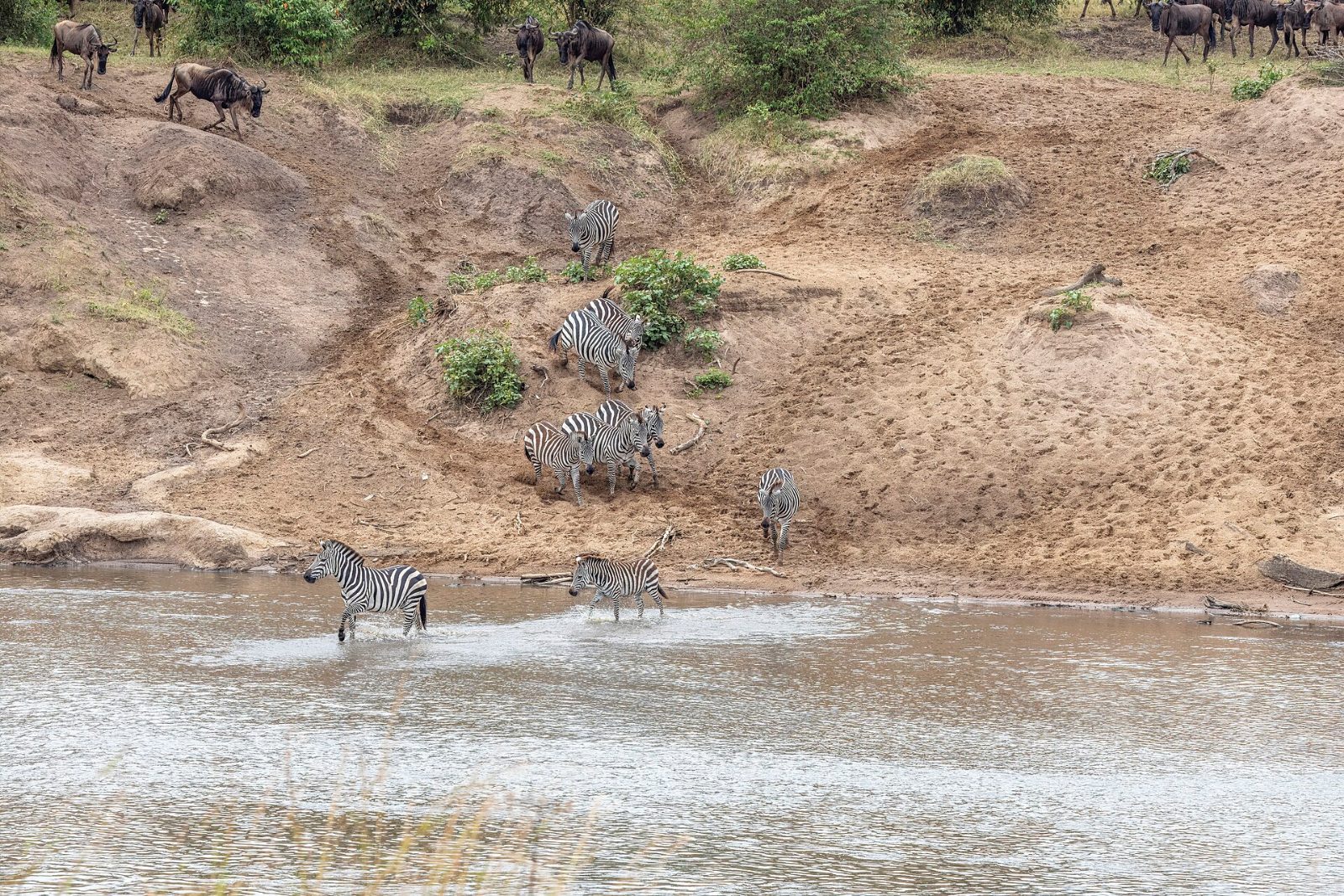
The Serengeti is packaged because it can hardly be visited any other way. Self-driving is legal but rare; the distances, the road surfaces, the fee system and the need for a bed by dark all push travellers to an operator with a vehicle and a guide. The other reason is the migration: more than a million wildebeest, with zebra and gazelle, moving in a rough annual loop around the ecosystem, calving on the southern plains around January and February, crossing the Grumeti and Mara rivers in the north in the middle of the year. Where the herds are in a given week decides where an itinerary should sleep, and that is the operator's job.
The honest picture: it is expensive by any measure, because government fees for the park and the crater are large and charged per person per day, and because everything from fuel to a bed has to be brought a long way. Days start before dawn and mean six to eight hours in a vehicle on corrugated dirt with dust in everything. Comfort ranges from a public campsite with a long-drop toilet to a tented camp with a bath, at prices that differ many times over. And wildlife does not perform to order; a two-night Serengeti stop can amount to a single full day of game viewing.
What a package buys here is a licensed operator's vehicle, guide and route, plus the fees and the beds. Those are the product; the scenery is free.
When to go
June to October is dry with the best game viewing; river crossings in the north are usually July to September. January and February is calving season in the south. April and May are wet and cheapest.
What a typical package looks like
5 to 8 day northern-circuit safaris from Arusha: Tarangire, Ngorongoro Crater, Serengeti. Sold as camping, mid-range lodge or luxury tented camp at very different prices.
| Length | Shape |
|---|---|
| 5 to 6 days (budget shared camping) | Arusha to Tarangire, two nights in the Serengeti, the Ngorongoro Crater, back to Arusha, in a shared 4x4 with a cook, sleeping in public campsites in dome tents. Sold by Arusha budget operators and online marketplaces as scheduled departures. Suits anyone who values the wildlife over the bed; the trade-off is basic facilities and a vehicle that moves at the group's pace. |
| 6 to 8 days (mid-range lodge or tented camp, private) | The same circuit with a private vehicle and guide, sleeping in permanent lodges or tented camps, often with a night in Karatu on the road to the crater. Sold by Tanzanian operators directly and through overseas agents. The most common format for couples and families; the extra days go north or south depending on the season. |
| 3 to 4 days (fly-in Serengeti only) | Light aircraft from Arusha to an airstrip inside the park, the camp's own vehicle and guide for game drives, and a flight out. Sold by camps and higher-end operators, often as the Serengeti chapter of a longer trip. Suits travellers with more money than time, or no appetite for the road. |
| 10 to 14 days (safari plus Kilimanjaro or Zanzibar) | The northern circuit bolted onto a Kilimanjaro climb or a week on Zanzibar. Sold by most operators. The safari portion is usually the standard 6 to 7 day circuit and should be judged on its own terms. |
What the price includes, and where money leaks
A properly quoted safari price includes the vehicle and driver-guide, fuel, accommodation and meals as specified, park entry fees for each person for each day in each park, the crater's separate vehicle fee, the concession or camping fees for nights spent inside, government taxes on those items and drinking water in the vehicle. The fees are the largest component after accommodation; they are set by the authorities in US dollars, charged per 24 hours or part of it, and have been revised upwards several times over the past decade. Any quote that says 'park fees not included' or 'fees payable locally' should be reworked to a fully inclusive figure before it is compared with anything else.
Excluded on almost every package: international flights, the Tanzanian visa, travel insurance, tips for the guide and, on camping trips, the cook, which are expected and add up over a week; drinks at lodges; a balloon flight over the Serengeti, which is a large optional; Maasai village visits, usually a paid stop; and single supplements, which are high because lodge stock is priced per double room. Domestic flights on fly-in itineraries are usually included, but with soft-bag weight limits well below airline norms.
To compare quotes, ask each operator for a line-by-line breakdown: nights by named property, fees listed separately, vehicle type, and whether the guide is an employee. A low quote from an online seller is often an agent's price for someone else's shared departure with fees excluded and a cheaper campsite substituted; the difference emerges on the road.
Getting there
Kilimanjaro International Airport, about an hour east of Arusha, is the gateway for the northern circuit, with a few direct flights from Europe and the Gulf and connections through Nairobi, Addis Ababa, Doha and Dar es Salaam. Arusha's own small airport handles the light aircraft into the parks. Travellers arriving via Nairobi can take the daily shuttle bus to Arusha through the Namanga border in five to six hours. From Arusha the road to the Serengeti's main gate runs through Karatu, over the Ngorongoro rim and across the Conservation Area: five to eight hours, mostly on gravel and dirt, normally broken by a night at Tarangire, Manyara or the crater.
Packages begin either with an airport transfer to an Arusha hotel the night before, or at the hotel on the morning of departure. Fly-in itineraries use airstrips such as Seronera, Kogatende and Ndutu, and a camp vehicle meets the plane.
Where packages put you
Four tiers exist, and the same park looks very different from each. Public campsites are basic sites with shared ablution blocks, used by budget groups with their own cook and tents; they are inside the park, so game drives start at the tent flap. Large lodges, some dating from the 1970s, sit on ridges and the crater rim with proper rooms, pools and restaurants, and take big groups. Permanent tented camps have plumbed canvas rooms on platforms, fewer of them and closer to the wildlife. Mobile camps move with the migration, pitched in the south for calving and the north for the crossings, and are the most immersive and most expensive version.
Position matters as much as tier. Camps inside the Serengeti cost more and save hours; lodges outside the gates, around Karatu or on the Lake Manyara escarpment, are cheaper and comfortable but add a long drive and a gate queue to each morning, and Karatu to the crater floor and back is a half-day in itself. For the migration, a camp in the wrong region is a camp with no migration, however good the bed. The itinerary should show where each night is spent and why, and a good operator will explain the choice against the month of travel.
Check these before paying a deposit
- Park and crater fees: large, government-set and sometimes excluded from the quoted price. Ask for the fully inclusive figure.
- Vehicle: a closed 4x4 with a pop-up roof and a guaranteed window seat. Six people in a vehicle for eight is a different trip from four.
- Whether the itinerary is 'shared' (you join others) or private. Shared departures are cheaper but the vehicle waits for nobody's photo.
- Guide credentials and the operator's licence with the Tanzania tourism authority. Many cheap online sellers are agents, not operators.
Good for
Wildlife Once-in-a-lifetime trips Photographers with long lenses
Skip it if
You want to save by cutting days. Two days in the Serengeti is barely one full day of game driving once transfers are counted.
What to ask the operator
Tanzanian tour operators must hold a licence under the government's tourism licensing scheme and are usually members of the national tour operators' association; ask for both and check the operator's name against the one on the vehicle and the booking confirmation, since many cheap online sellers are agents reselling someone else's departure. Ask the guide's experience and whether the guide is an employee or freelance. Ask for the vehicle specification in writing: a closed 4x4 with a pop-up roof, a guaranteed window seat, charging points and a fridge, with the number of passengers stated. Seven passengers in a vehicle built for seven, one of them in the middle seat, is a common cause of complaint.
Ask whether the departure is private or shared and, if shared, the maximum group and whether it is guaranteed to run. Ask how many hours in the crater are booked, since the authority limits vehicle time on the floor. Ask which region of the Serengeti the itinerary sleeps in for your month, and why. Ask for the tipping guidance in writing, the luggage limit if there is a flight, and the contingency when a vehicle breaks down. Drones are prohibited in the parks. Finally, ask whether cultural visits are optional and how the community is paid; a Maasai village 'visit' run as a photo stop is neither good use of time nor a fair exchange.
Mistakes people make here
- Comparing a quote with fees included against one with fees excluded and choosing the cheaper.
- Booking two nights in the Serengeti and expecting two full days of game drives; transfers eat both ends.
- Choosing a lodge outside the park for the price and losing the early morning, when the animals are active.
- Assuming July to September is the only migration season; calving in January and February is as rewarding and easier to reach.
- Bringing hard-shell luggage on a fly-in itinerary with a soft-bag weight limit.
- Skipping the tipping budget, which for a week with a guide and a cook is a meaningful sum.
- Booking through an online seller without confirming the name and licence of the operator whose vehicle you will actually be in.
Where to compare packages for Serengeti
For multi-day packages, start with a marketplace to see the field, then check the operator's own site for price and terms. For day tours inside a trip you have planned yourself, use an activity marketplace.
| Use | Where | Why |
|---|---|---|
| Multi-day packages | TourRadar, G Adventures, Intrepid Travel | Widest catalogue first, then two operators that run their own trips. |
| Day tours and tickets | Viator, GetYourGuide | Fill free days; check the free-cancellation window on each listing. |
Frequently asked questions
How much does a Serengeti safari cost?
There is no single figure. The range runs from a shared camping safari to a fly-in mobile camp at many times that, and the government fees alone, charged per person per day for each park and separately for the crater, set a floor below which no honest quote can go. Ask for a fully inclusive price and a breakdown before comparing.
When is the best time for the Serengeti?
June to October is dry, with the best general viewing and river crossings in the north usually between July and September. January and February bring calving in the south with predators in attendance. April and May are wet, green, cheapest and quiet, with some camps closed and roads difficult.
How many days do you need?
Six to seven days for the northern circuit is the sensible standard: Tarangire, the crater and three nights in the Serengeti. Five works if the Serengeti gets two full days. Anything shorter is mostly driving.
Is a shared safari much worse than a private one?
Not worse, different. A shared vehicle is cheaper and the wildlife is the same, but it moves on a compromise and a full vehicle means a middle seat. Photographers, families with small children and anyone who wants to sit with a sighting for an hour should pay for private.
Camping or lodge?
Camping on the public sites puts you inside the park at the lowest cost, with cold nights, basic facilities and animals passing the tent. Lodges and tented camps add a shower and a proper bed at a much higher price. Many mid-range packages mix the two.
Can you see the migration on a five-day safari?
Usually, provided the itinerary sleeps in the right region for the month and the operator is honest about it. The herds are spread over a huge area and a river crossing cannot be scheduled; travellers who go for the crossing specifically need several days in the north and some luck.
From operator itineraries, official tourism and park authorities, and published traveller reports. Nobody on the team is claiming a trip they did not take. Prices are deliberately left out because they change weekly; check the operator page on the day.