Torres del Paine, Patagonia: what a package should include
The honest picture
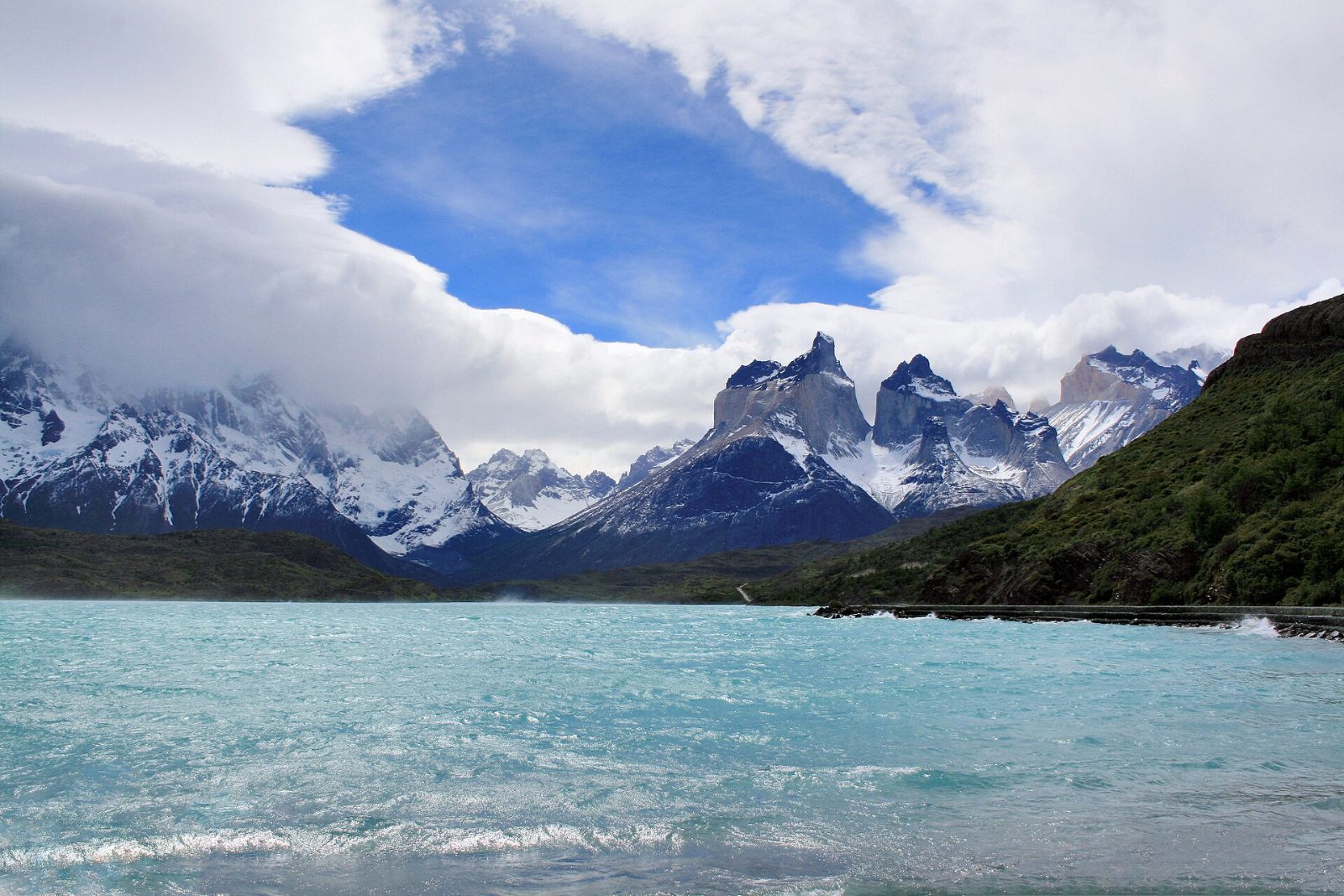
Torres del Paine is a national park in the far south of Chile, roughly two hours by road north of Puerto Natales, built around a compact granite massif that rises straight out of the steppe. The three towers that give the park its name, the horn-shaped Cuernos, Glacier Grey and the turquoise lakes below them all sit within a few days' walk of each other, which is why the park has become the most trekked corner of Patagonia and the anchor of nearly every southern South America itinerary.
People package it because the logistics are unusually unforgiving. Beds and tent pitches inside the park are run by concessionaires and the park administration, they must be reserved in advance for every night of a multi-day trek, and rangers check the reservations at the entrance. The refugios open their booking calendars months before the season and the popular nights go quickly. An operator that already holds a block of beds is selling something a late-booking traveller often cannot get at any price.
The honest picture: this is a windy, cold, physically demanding place even in midsummer. Gusts strong enough to knock walkers over are normal on exposed passes, rain arrives sideways, and the famous sunrise on the towers is cloud-covered as often as not. The park is also busy from December to February; the W trek in particular funnels several hundred walkers a day along the same paths, and the refugio dormitories are full. Anyone hoping for solitude should look at the shoulder months or the back of the O circuit.
Most trips combine the park with the Argentine side of the border, usually El Calafate for the Perito Moreno glacier and sometimes El Chaltén for the Fitz Roy trails. That adds a border crossing and a long bus day, but it is the natural shape of a two-week Patagonia package and it is how the majority of operators sell the region.
When to go
November to March is the season, with the longest days in December and January. Wind is strongest in summer; shoulder months are calmer but colder.
What a typical package looks like
4 to 5 day W trek or 7 to 9 day O circuit, guided or self-guided with refugio bookings included. Often combined with El Calafate and the Perito Moreno glacier across the border in Argentina.
| Length | Shape |
|---|---|
| 1 to 2 nights, day tours from Puerto Natales | A full-day vehicle circuit of the park's viewpoints and lakes, sometimes with a short walk to a waterfall or a glacier viewpoint. Sold by every agency in Puerto Natales and bundled into cruise and coach tours of Patagonia; suits travellers who want the scenery without a multi-day walk. |
| 4 to 5 days, the W trek | The classic package: Glacier Grey, the French Valley and the towers, sleeping in refugios or at their campsites, walked west to east or the reverse. Sold guided by international small-group companies and self-guided by local agencies as a bookings-plus-transfers bundle; suits fit walkers who can manage 15 to 25 km days with a light pack. |
| 7 to 9 days, the O circuit | The W plus the quieter northern loop over the John Gardner pass, walked anticlockwise as the park requires, with more camping and fewer refugio comforts. Mostly sold by trekking specialists; suits experienced hikers with the time and the fitness for a long day over the pass. |
| 10 to 14 days, Patagonia combination | Two or three days in the park on day walks or a shortened W, then buses to El Calafate for Perito Moreno and often El Chaltén, sometimes ending in Buenos Aires. This is the standard shape from mainstream tour operators; suits first-time visitors who want the highlights of both countries rather than one long trek. |
What the price includes, and where money leaks
For guided treks the headline price usually covers the guide, the beds or pitches for each night, the transfers from Puerto Natales, the catamaran across Lago Pehoé and most meals in the park. It normally excludes the flight to Punta Arenas or Puerto Natales, the park entry ticket (sometimes included, often not), hotel nights before and after, and anything bought at the refugios. Self-guided packages are cheaper because they strip out the guide and typically the meals; read the meal plan line by line, because half board at one refugio and full board at the next is common.
Money leaks in predictable places. Refugio prices step up sharply from a dormitory bed, to a bed with bedding, to a pitched tent with a mattress, to a private room; a quote built on the cheapest tier can look far better than one built on the middle tier without being a better deal. Camping gear rental, packed lunches, the bus from Punta Arenas airport and the catamaran are each priced separately if not bundled. Tips for guides and porters on guided trips are expected and not included. A single traveller in a dormitory pays no supplement, but on the hotel nights around the trek the single supplement applies.
To compare quotes, ask each operator for a night-by-night list naming the refugio or campsite, the sleeping tier and the meals included, then add the excluded items yourself. Two quotes for 'the W trek' can differ by a night at Chileno versus Central, which changes whether the towers are seen at dawn, and by whether the last day includes the bus back or leaves you at the gate.
Getting there
The gateway airport is Punta Arenas, about three hours by road from Puerto Natales; Puerto Natales has a smaller airport with flights from Santiago that run mainly in the summer season. Scheduled buses from Puerto Natales enter the park at Laguna Amarga (for the towers side) and continue to Pudeto, where the catamaran crosses to Paine Grande for the western end of the W. From Argentina, buses connect El Calafate with Puerto Natales in around five hours including the border formalities.
Packages generally start in Puerto Natales with a briefing the evening before the trek, and most include the bus into the park on day one and out on the last day. What varies is the arrival: some include the transfer from Punta Arenas airport, others expect you to reach the town under your own steam by a fixed time. Check which, because the airport bus timings do not always line up with the park buses.
Where packages put you
Inside the park, multi-day trekkers sleep in refugios (mountain lodges with dormitories, dining rooms and hot showers), at the campsites attached to them, or at a handful of more basic campsites on the O circuit. The refugios sit at the natural stopping points along the W, so the choice between them is mostly about the day's distance and whether you want to be at the foot of the towers for a dawn start. Dormitories are mixed and bunk beds are close; light sleepers should ask whether a private room is available at any stop.
Outside the park, packages use hotels in Puerto Natales, a small town where everything is walkable, or one of the hotels and estancias on the park's edge, which are quieter, far more expensive and put you an hour closer to the trailheads. Day-tour packages that sleep outside the park spend two to three hours a day on the road; that is the trade for a proper bed and a hot dinner every night.
Check these before paying a deposit
- Refugio or campsite bookings: confirmed, named, and for the nights the itinerary says. Without them you cannot legally walk the circuit.
- Meals: full board in refugios or carry your own. The difference is several kilos of pack weight.
- Weather cancellations: catamaran and bus connections in the park stop in high wind. What is the fallback plan?
- Distances per day. Some 'W in 4 days' itineraries need 25 km days; check your own pace against them.
Good for
Trekkers Landscape photographers Travellers who want a hard itinerary handled
Skip it if
You dislike wind, cold and shared dormitories, or need to book at short notice in high season.
What to ask the operator
Ask for the reservation confirmations by name and date before paying the balance. Ask whether the operator books the refugios directly with the concessionaires or through an intermediary, how they handle a cancelled catamaran or a closed pass, and whether the guide holds a wilderness first-aid qualification. Ask what happens to the itinerary if the towers day is washed out, because a fixed booking chain leaves no room to wait a day for clear weather. For self-guided packages, confirm whether the entry ticket is issued in your name and whether you must show it, with the reservations, at the gate.
The park's rules shape what any operator can offer: the O circuit has a set direction, the back-side campsites close outside the main season, fires are banned and cooking is limited to designated shelters, and the entry ticket is generally bought online in advance rather than at the gate. Group size matters more here than at most destinations because dormitory and campsite capacity is fixed; a company running groups of twelve or more has to spread them across several sites or book far ahead, and it will move at the pace of its slowest walker on days with a bus or boat to catch.
Mistakes people make here
- Assuming a refugio bed can be sorted out on arrival in Puerto Natales in January.
- Booking a 'W in 4 days' without checking that the daily distances fit your fitness.
- Packing for a summer holiday; the wind and cold in December are real.
- Treating the sunrise at the towers as guaranteed rather than a coin toss.
- Choosing the cheapest sleeping tier and then paying to upgrade at each refugio.
- Forgetting that the border day to El Calafate eats most of a day.
- Carrying food for full self-catering when the package already included meals, or the reverse.
Where to compare packages for Patagonia
For multi-day packages, start with a marketplace to see the field, then check the operator's own site for price and terms. For day tours inside a trip you have planned yourself, use an activity marketplace.
| Use | Where | Why |
|---|---|---|
| Multi-day packages | TourRadar, G Adventures, Intrepid Travel | Widest catalogue first, then two operators that run their own trips. |
| Day tours and tickets | Viator, GetYourGuide | Fill free days; check the free-cancellation window on each listing. |
Frequently asked questions
Do I need a guide to trek the W or the O circuit?
No, both routes are waymarked and walked self-guided by many people, but every night must be pre-booked at a refugio or campsite and reservations are checked at the entrance. A guided package adds route knowledge, weather judgement and a fallback when connections fail. Self-guided packages sell the bookings and transfers without the guide.
When do refugio bookings open and how far ahead should I book?
The concessionaires usually open their calendars several months before the season, and for December to February departures most operators recommend booking six months ahead or more. Shoulder months are easier but still not last minute. If a package is sold for a high-season date at short notice, ask exactly which nights it holds.
How hard is the W trek?
Moderate to strenuous: four or five consecutive days of 12 to 25 km with several hundred metres of climb on the towers and French Valley days, on rough but well-trodden trails. The difficulty is in the weather and the consecutive days rather than any single technical section.
Is the O circuit closed in winter?
Yes, the northern section usually closes outside the main season, roughly April to October, and the whole circuit is walked anticlockwise. The W is open year round with reduced services, and winter walkers generally go with a guide.
Can I combine Torres del Paine with Argentina?
Yes, most packages do; the standard pairing is El Calafate for Perito Moreno, with El Chaltén added for Fitz Roy when the trip has time. Allow a full day for each bus-and-border leg and expect the bus to be booked by the operator well in advance.
How does the park entry work?
Entry tickets are purchased through the park's official online system, usually in advance, and are checked with your reservations at the gate. Some packages include the ticket, many do not; confirm which, and confirm the ticket covers the number of days you will be inside.
From operator itineraries, official tourism and park authorities, and published traveller reports. Nobody on the team is claiming a trip they did not take. Prices are deliberately left out because they change weekly; check the operator page on the day.