Machu Picchu, Peru: what a package should include
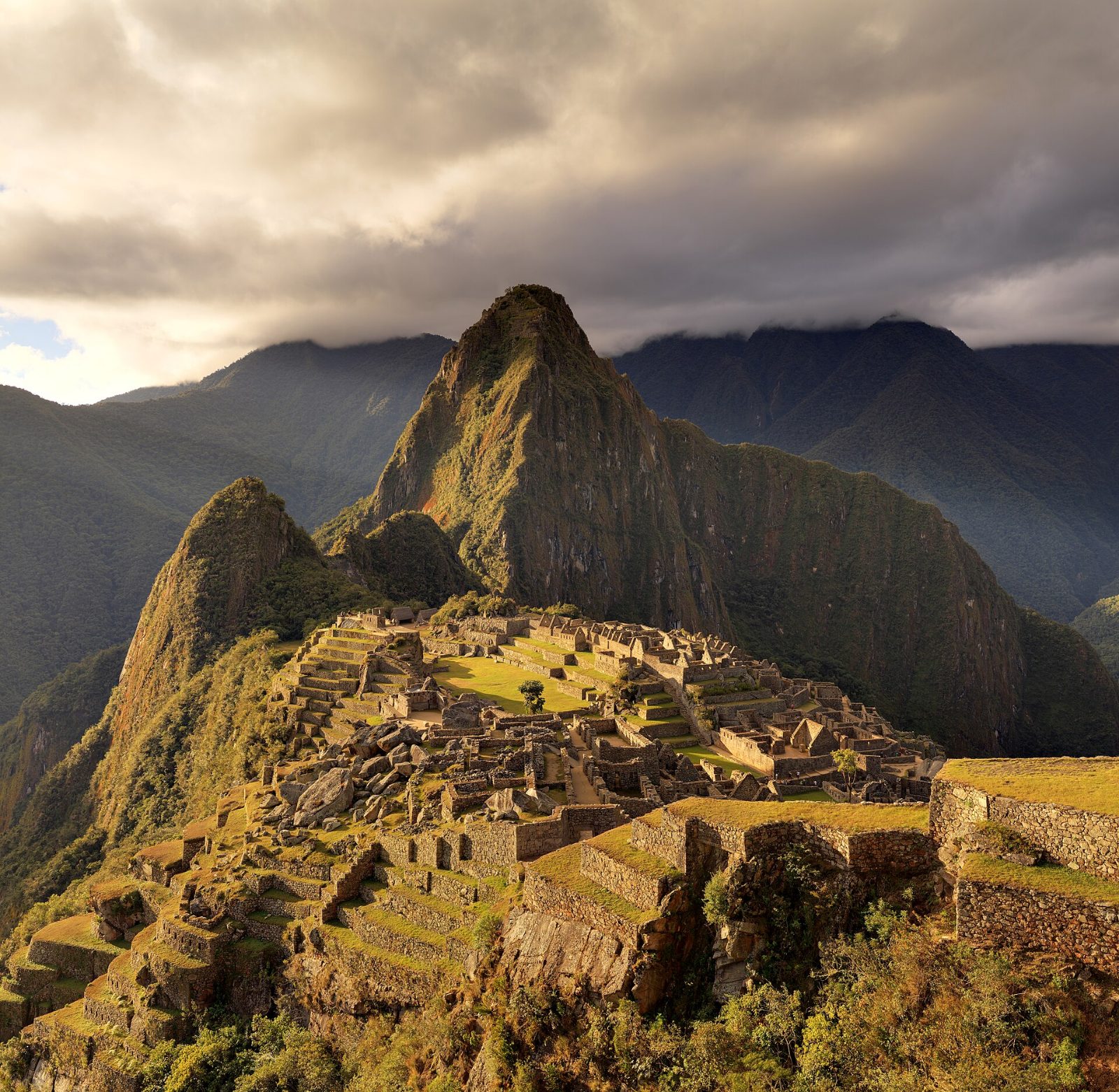
The honest picture
Machu Picchu is a fifteenth-century Inca estate set on a ridge at about 2,430 m above the Urubamba river, roughly 80 km north-west of Cusco. It was never found by the Spanish, was brought to international attention in 1911, and has been a UNESCO site since 1983. The citadel itself is the image everyone knows; the sanctuary around it, the Inca Trail that leads to it through cloud forest, and the Sacred Valley between it and Cusco are what a visit actually consists of.
It is packaged more thoroughly than almost any other site in South America because access is controlled at every step. Entry tickets are timed and tied to a specific circuit through the ruins. The classic Inca Trail can only be walked with a licensed operator, on a permit issued in the trekker's passport name, and permits sell out months ahead. The last stretch is by train to Aguas Calientes and then by shuttle bus up the switchbacks. An operator is not a convenience here; it is the mechanism by which the visit happens.
The honest picture: the site is crowded and heavily managed. Daily visitor numbers are capped at a few thousand, raised somewhat in high season, and visitors move one way along the assigned circuit with limited time inside. Not every circuit includes the classic postcard view from the upper terraces. The dry season from May to September brings clear mornings and the biggest crowds; the wet season from November to March is greener, quieter and muddier, and the classic Inca Trail closes for all of February. Altitude is the other constant: Cusco sits at about 3,400 m and most visitors feel it for a day or two.
The trip is nonetheless one of the most consistently satisfying on the continent, and the difference between a good package and a poor one is mostly sequencing: acclimatisation before exertion, the right circuit on the ticket, and enough time in the Sacred Valley to make the region, not just the ruins, the point.
When to go
May to September (dry season). The classic Inca Trail closes every February for maintenance.
What a typical package looks like
4 day Inca Trail trek, or 1 to 2 day train visits from Cusco. Usually part of an 8 to 12 day Peru itinerary with Lima and the Sacred Valley.
| Length | Shape |
|---|---|
| Day trip from Cusco by train | A very early departure, train to Aguas Calientes, bus up, two to three hours in the citadel with a guide, and back the same night. Sold by every Cusco agency and as an optional on Peru packages. It suits people short on time, at the cost of a 16-hour day and arrival at the busiest hours. |
| 2 days / 1 night with a Sacred Valley stop | Cusco to Ollantaytambo through the valley's ruins and markets, the train onwards, a night in Aguas Calientes and an early entry the next morning. This is the shape most 8 to 12 day Peru itineraries use. It suits nearly everyone, because it gives the first-slot entry and a gentler altitude profile. |
| 4 day classic Inca Trail | Three nights camping on the trail with porters and a cook, arriving at the Sun Gate on the fourth morning before the train back. Sold only through operators licensed for the trail, and often subcontracted by international companies. It suits fit walkers who book four to six months ahead and want the pilgrimage rather than the site alone. |
| Alternative treks, 2 to 5 days | Five-day Salkantay over a high pass, a three to four day Lares community route, or the two-day trail from Km 104, all finishing with the standard citadel visit. Sold by the same trekking operators and needing no Inca Trail permit. They suit late bookers, those wanting fewer people, and anyone put off by the classic trail's campsites. |
What the price includes, and where money leaks
A train-based package normally includes the rail fare in a standard carriage, the bus up to the site, the timed entry ticket, a guide and the hotel. A trekking package includes the permit, the entry ticket, the guide, a cook and porters carrying tents, food and group equipment, all meals on the trail, the train back and the bus. What it usually excludes is personal kit: sleeping bag and mat hire, walking poles, and a personal porter for anyone who does not want to carry their own pack, the single most common add-on. Tips for porters, cook and guide are expected at the end of a trek and are collectively significant.
The other leaks are upgrades and add-ons. Panoramic train carriages cost more than standard ones and are pushed hard. Huayna Picchu and Machu Picchu Mountain are separate, limited tickets bought with the main entry and usually offered as optionals; decide early because they sell out. A single traveller on a trek pays a supplement for a tent alone. Lunch in Aguas Calientes is rarely included and the town is expensive by Peruvian standards. Travel insurance must cover trekking at altitude, which not all standard policies do.
To compare quotes, check that the price covers the permit and entry ticket in your name, the circuit number, whether the guide is private or shared, the group size, the train class and station, and the number of Cusco or valley nights before the visit. The cheapest trek quotes frequently rest on porter pay and loads below what the law requires, so the lowest number is often the most expensive in another sense.
Getting there
Peru's international gateway is Lima, with a flight of a little over an hour to Cusco. From Cusco the standard route is by road to Ollantaytambo in the Sacred Valley, about two hours, then by train through the Urubamba gorge to Aguas Calientes in roughly another hour and a half; in the wet season the trains from Cusco's own stations are replaced by a bus-and-train combination. From Aguas Calientes the only ways up are the shuttle buses or a steep walk of about 90 minutes.
Packages usually meet arrivals at Cusco airport and build in at least one night there or in the valley, which is sensible given the altitude. Trekkers are collected before dawn on trail day and driven to the Km 82 trailhead. Luggage catches people out: the trains limit hand luggage to a small bag, and hotels in Cusco store the rest, so a package should say where the suitcases go and when they come back.
Where packages put you
Packages spread nights across three places at three altitudes. Cusco, at about 3,400 m, has colonial-era hotels in the historic centre and steep streets that are hard work on the first day; it is where most itineraries start. The Sacred Valley, several hundred metres lower around Urubamba and Ollantaytambo, has countryside lodges and small hotels and is easier on the body, which is why better-sequenced packages sleep there before Machu Picchu. Aguas Calientes, at around 2,040 m, is a compact tourist town wedged into the gorge; it is noisy, functional and the only way to be at the gate for the first entry slot.
On the Inca Trail the accommodation is a tent at campsites fixed by the park authority and allocated with the permit, so the campsite is decided by the permit, not the traveller. Better operators supply roomy two-person tents, a dining tent and a toilet tent; budget ones supply less. Alternative treks such as Salkantay increasingly offer lodge or dome-tent nights as a comfort upgrade. Whatever the shape, ask for the hotel names in Cusco and the valley, because the range within the same star rating is wide.
Check these before paying a deposit
- Inca Trail permits: limited to 500 people per day including porters, sold out 4 to 6 months ahead in high season.
- Which entry circuit and time slot the ticket covers; not all include the classic view.
- Acclimatisation days before the trek. Cusco is at 3,400 m.
- Porter welfare: ask about weight limits and whether porters are paid the legal wage.
Good for
Trekkers Bucket-list travellers Small groups
Skip it if
You cannot book at least 4 months ahead in high season, or altitude is a medical concern.
What to ask the operator
For the classic trail, the operator must hold a licence from the Peruvian culture ministry and the park authority, and permits are issued to the operator against a named passport. Ask for written confirmation that the permit exists in your name, because international companies routinely subcontract to a local operator and the chain can go wrong. Ask about porter welfare: Peru's porter law sets a maximum load and other protections, and reputable operators will state their weight limits, pay, equipment and insurance without being pushed. Ask which circuit is on the entry ticket, whether it includes the upper terrace view, and how many acclimatisation nights precede any trek.
Group size on the trail is regulated, with larger groups requiring additional guides, and in practice ranges from a private party to around 16. Smaller groups walk at a more even pace and wait less at checkpoints. At the citadel, guides work with groups up to a set maximum, so a large tour splits and the experience depends on which guide you draw. For train-based visits, ask whether the guide is the operator's own or hired at the gate, and whether the entry is the first slot of the morning or a mid-morning one; the difference in light and crowds is considerable.
Mistakes people make here
- Flying into Cusco and starting the Inca Trail the next morning without a day at altitude.
- Assuming the permit can be bought later; in high season it is gone four to six months ahead.
- Accepting an entry ticket on a lower circuit and discovering the classic terrace view is not on it.
- Planning the classic trail for February, when it is closed.
- Leaving the passport at the hotel, when it must be shown at the trail checkpoint and the site gate.
- Choosing the cheapest trek quote without asking how the porters are paid and loaded.
Where to compare packages for Machu Picchu
For multi-day packages, start with a marketplace to see the field, then check the operator's own site for price and terms. For day tours inside a trip you have planned yourself, use an activity marketplace.
| Use | Where | Why |
|---|---|---|
| Multi-day packages | TourRadar, G Adventures, Intrepid Travel | Widest catalogue first, then two operators that run their own trips. |
| Day tours and tickets | Viator, GetYourGuide | Fill free days; check the free-cancellation window on each listing. |
Frequently asked questions
Do I need to book Machu Picchu months in advance?
For the classic Inca Trail in the dry season, yes: permits are capped at 500 people per day including guides and porters and typically sell out four to six months ahead. Entry tickets for a train visit are easier but also limited and timed, and first-slot mornings in high season go early. Operators do not hold either in bulk; they buy when you commit.
Which is better, the Inca Trail or the train?
They are different trips. The trail is four days of walking through Inca sites and cloud forest, arriving on foot; the train is a comfortable day or two centred on the citadel. Fitness, time and how early you booked usually decide. Alternative treks give much of the walking without the permit problem.
How bad is the altitude?
Cusco at 3,400 m affects most people with headache, breathlessness and poor sleep for a day or two. Machu Picchu itself is lower, at about 2,430 m, and rarely a problem. Sleeping in the Sacred Valley first, drinking water, avoiding alcohol and taking the first day gently all help. Anyone with heart or lung conditions should ask a doctor.
Is a guide compulsory at Machu Picchu?
The site regulations require visitors to enter with a licensed guide, though enforcement has varied over the years; packages include one as standard. Guides work to a maximum group size and follow the circuit on your ticket. A private guide, sold as an upgrade, lets a small party set its own pace.
What are the Machu Picchu circuits?
Entry tickets are sold by circuit, each a fixed one-way route through part of the site. In broad terms one covers the upper terraces and the classic panorama, one covers both the panorama and the main buildings, and one covers the lower urban sector. Huayna Picchu and Machu Picchu Mountain are add-ons attached to specific circuits. The details have changed several times, so check the current version when booking.
When does the Inca Trail close?
Every February, for maintenance and because it is the wettest month. The site itself and the alternative treks stay open. The rest of the wet season is walkable but muddy, and the dry season from May to September is the most popular and the most booked.
From operator itineraries, official tourism and park authorities, and published traveller reports. Nobody on the team is claiming a trip they did not take. Prices are deliberately left out because they change weekly; check the operator page on the day.