Hoi An, Vietnam: what a package should include
The honest picture
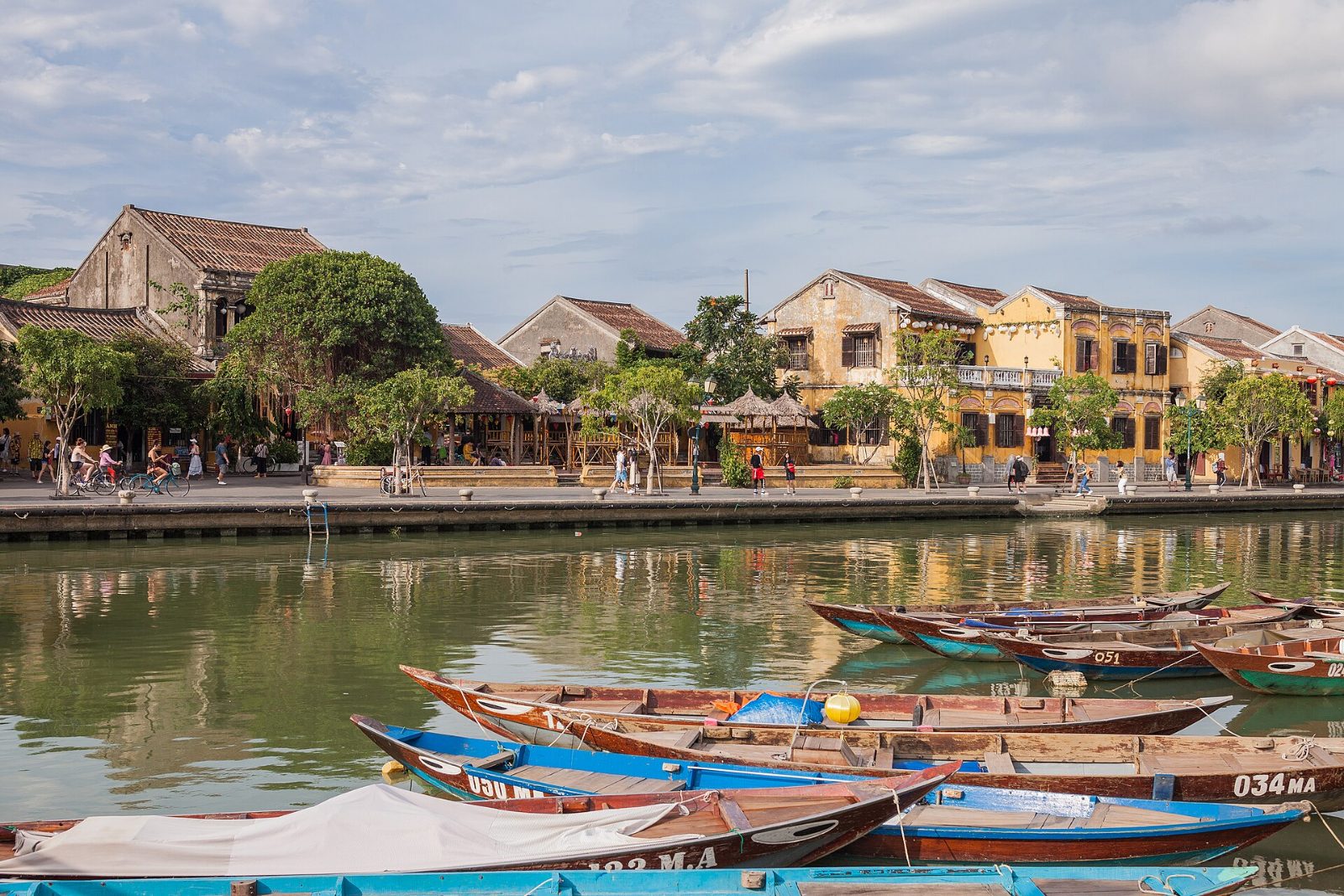
Hoi An is a small town on the Thu Bon river in central Vietnam, about 30 km south of Da Nang, whose old quarter came through the twentieth century's wars largely intact. Between the fifteenth and nineteenth centuries it was one of Southeast Asia's busiest trading ports, and the Japanese Covered Bridge, the Chinese assembly halls, the merchant houses and the shophouses along Tran Phu and Nguyen Thai Hoc streets date from that era. UNESCO listed the Ancient Town in 1999. Around it lies a working countryside of rice fields and vegetable gardens, the Cam Thanh coconut waterways, and a coastline with An Bang beach, all within a short bicycle ride.
It is packaged because almost every Vietnam itinerary running from Hanoi to Ho Chi Minh City passes through the centre of the country, and Hoi An is the pleasant stop between Hue and the flight south. Operators put it on the schedule for the cooking classes, the lantern-lit evenings, the tailors, and the day trip to My Son, the ruined Cham temple complex about 40 km inland. It is also the easiest place in Vietnam to enjoy without a guide, which is the awkward truth for a package: the guided walking tour of the old town takes an hour or two, and the rest of the value comes from free time.
The honest picture has three parts. The old town is beautiful and busy; by evening the streets by the river are crowded with visitors, the lantern boats are a commercial operation and the full-moon lantern festival is a spectacle shared with thousands. The weather divides the year sharply: February to April is dry and mild, summer is hot, and the October to November rains flood the riverside streets most years, sometimes to the first floor of the old houses. And the commerce around tailoring, cooking classes and basket-boat rides is intense enough that some part of almost any package is earning someone a commission.
Packages that work here give Hoi An two or three nights, one guided morning, one activity, and leave the rest alone. Packages that do not treat it like a museum city and schedule every hour.
When to go
February to April is dry and mild. September to November brings heavy rain and the old town floods most years; the full-moon lantern nights run all year.
What a typical package looks like
2 to 3 nights on a 10 to 14 day north-to-south Vietnam package, usually between Hue and Ho Chi Minh City, with a day trip to My Son and a cooking class or lantern-making workshop.
| Length | Shape |
|---|---|
| 2 nights (on a Vietnam circuit) | The standard central stop on a 10 to 14 day north-to-south package: arrive from Hue by road over the Hai Van Pass with stops, a guided old-town walk, a cooking class or lantern-making workshop, sometimes My Son on the second morning, then a flight from Da Nang. Sold by nearly every international group operator and Vietnamese ground handler. Suits first-time visitors doing the whole country. |
| 3 to 5 nights (town and beach stay) | Hotel-plus-transfers with one or two included excursions and the rest free, often sold as the relaxing middle of a longer trip or as a honeymoon add-on. The hotel is usually at An Bang or Cam Thanh rather than in the old town. Suits couples and anyone who wants the countryside and the beach as much as the streets. |
| Day trip from Da Nang or a cruise call | Coach or car from Da Nang hotels or from the cruise berth at Tien Sa, taking in the old town, sometimes the Marble Mountains, and a lunch. Six to eight hours, arriving in the midday heat and leaving before the lanterns come on. The least satisfying way to see the town, though fine for anyone based in Da Nang for a beach week. |
| 5 to 7 days (central Vietnam only) | Hue, Da Nang, Hoi An and My Son as a stand-alone regional package, with two or three nights in Hoi An. Sold by regional operators and increasingly through online marketplaces. Suits travellers on a second visit, or with limited time, who want depth rather than the whole country. |
What the price includes, and where money leaks
The headline price for the Hoi An leg of a package typically covers the hotel with breakfast, the transfer from Hue or Da Nang, a guided old-town walk and one activity such as a cooking class. The old-town entrance ticket, a combined ticket that admits visitors to a set number of heritage buildings and is checked at booths on the main streets, is sometimes included and sometimes left to the traveller. My Son entry is usually included if the excursion is, and excluded if My Son is sold as an optional. Lunches are often included on excursion days; dinners almost never are.
The leaks are small individually and numerous. Lantern boats on the river, the bicycle hire that some hotels charge for and some give free, the basket-boat ride at Cam Thanh where the paddlers spin the boat for tips, and the 'free' cooking class that begins with a market visit and ends at a shop. Tailoring is the big one: a tour leader's recommended tailor is paying a commission, and a package that stops for two nights leaves time for only one fitting, which is where badly finished suits come from. Single supplements apply on group departures, and the domestic flight south from Da Nang is sometimes quoted separately on cheaper packages.
To compare quotes, line up the number of nights, the hotel's location, which excursions are in, whether the old-town ticket is covered, and how much free time each day leaves. The cheapest quote is usually the one that stacks a factory-scale cooking class and a sunrise-to-dark schedule into a single day so that the second night is barely used.
Getting there
Da Nang International Airport is the gateway, about 45 minutes by road from the old town, with direct flights from Hanoi, Ho Chi Minh City and a growing number of regional cities. The railway also runs to Da Nang station on the Reunification Express line, and packages that use the train from Hue then finish the journey by car. The most common arrival on a circuit is by road from Hue: three to four hours over the Hai Van Pass with stops at Lang Co lagoon and the Marble Mountains, or somewhat faster through the tunnel. Hoi An itself has no airport or railway station, so every package includes a transfer of some kind; the question is whether it is a shared coach or a private car.
Where packages put you
Packages use three zones that feel like three different holidays. The old town and the streets just across the river on Cam Nam and An Hoi put you within a walk of everything, at the price of evening noise, no vehicle access in the pedestrian hours and the risk of flooding in the autumn. The countryside belt at Cam Thanh and Cam Chau, ten minutes out by bicycle, has villas and homestays among rice fields with free bikes and hotel shuttles into town. The beach at An Bang and, further south, Cua Dai has the resorts, with the hotel pool and the sea, and shuttle buses into town that stop running at a set hour.
Two things to check on the voucher. First, whether a 'beach resort' is on An Bang, which is a working, lively beach, or on Cua Dai, where erosion has removed much of the sand along some stretches over the past decade and several resorts sit behind sea walls. Second, whether a package labelled Hoi An actually sleeps in Da Nang, 30 to 45 minutes away, which some coach tours do in order to use bigger hotels; that turns the lantern-lit evening into a bus ride.
Check these before paying a deposit
- Where the hotel is: the old town, An Bang beach and Cam Thanh village are 10 to 20 minutes apart by taxi and feel like different trips.
- Whether the My Son visit is at sunrise (cool, quiet) or midday (hot, tour-bus crowds).
- How much free time the itinerary leaves. Hoi An rewards wandering, and a packed schedule wastes it.
- Tailoring: any 'recommended tailor' on a tour is paying commission to someone. Two fittings need two days, so check the length of the stop.
Good for
Food and cooking classes Couples A slow stop on a fast itinerary
Skip it if
You are visiting in October or November and cannot cope with flooded streets and cancelled boat trips.
What to ask the operator
Vietnam requires tour guides to hold a licence from the national tourism administration, and a guide working with foreign visitors carries an international guide card. Ask whether the person leading the old-town walk is a licensed local guide or the tour leader travelling with the group. Ask how many shopping stops the itinerary includes and whether the tailor visit is optional, and ask where the cooking class is held: a family kitchen or a small school with a dozen guests is a different experience from a hall that seats sixty. Ask what time My Son starts; a sunrise departure avoids both the heat and the coach convoys.
Group size shows most in the narrow streets and on the river. Twelve people can be talked through a merchant house; forty cannot. Ask what the operator does in the flood weeks of October and November, when boat trips are cancelled and some streets close: a good answer involves alternative activities rather than a shrug. And ask how much unscheduled time the itinerary gives, since the best hours in Hoi An are early morning before the day-trippers arrive and the hour after sunset, and a package that spends both in a van has missed the point.
Mistakes people make here
- Ordering a tailored suit on a two-night stop that only allows one fitting.
- Visiting My Son at midday in April or May, when the site is exposed, shadeless and packed with coaches.
- Booking a 'Hoi An' package that actually sleeps in Da Nang.
- Expecting the old town to be quiet in the evening; it is at its busiest between sunset and ten.
- Travelling in late October or November without checking the operator's flood contingency.
- Paying for a cooking class with sixty people when a small one costs about the same.
- Filling every hour with excursions and leaving no time to wander, which is what the town is for.
Where to compare packages for Hoi An
For multi-day packages, start with a marketplace to see the field, then check the operator's own site for price and terms. For day tours inside a trip you have planned yourself, use an activity marketplace.
| Use | Where | Why |
|---|---|---|
| Multi-day packages | TourRadar, G Adventures, Intrepid Travel | Widest catalogue first, then two operators that run their own trips. |
| Day tours and tickets | Viator, GetYourGuide, Klook | Fill free days; check the free-cancellation window on each listing. |
Frequently asked questions
Do you need a guide in Hoi An?
For the old town, no; it is compact, flat and well signposted, and the heritage ticket comes with a map. A guide is worth having for My Son, where the Cham history is not obvious from the stones, and for the countryside villages. Packages that schedule a full guided day in the old town are spending your time on something you could do yourself in an hour.
When does Hoi An flood?
Most years between mid October and late November, after typhoons and heavy rain upstream on the Thu Bon. Flooding usually lasts a few days at a time; streets near the river go under first and some old houses close. Packages in these weeks should have a plan for cancelled boat trips.
What is the old-town ticket?
A combined entrance ticket sold at booths around the pedestrian zone that admits you to a set number of the heritage buildings, assembly halls and small museums and helps fund their upkeep. It is checked mainly at the buildings themselves and at some booths on the main streets. Check whether your package includes it; many do not.
Is the beach worth building into a package?
An Bang is a genuine, pleasant beach a ten-minute ride from town and a good base for a slower stay. It is not a destination on its own in the way Phu Quoc or Nha Trang are, and the sea is rough and cool from roughly October to February.
How long does it take from Hue to Hoi An?
Three to four hours by road with stops at the Hai Van Pass, Lang Co and the Marble Mountains, or about two and a half hours direct through the tunnel. Packages almost always take the scenic route, which makes it a half-day rather than a transfer.
Is the lantern festival worth timing a trip around?
The full-moon evening, on the fourteenth day of the lunar month, switches off the electric lights in the old town and fills the river with lanterns. It is atmospheric and extremely crowded. Lanterns are lit every evening anyway, so a package does not need to hit the date.
From operator itineraries, official tourism and park authorities, and published traveller reports. Nobody on the team is claiming a trip they did not take. Prices are deliberately left out because they change weekly; check the operator page on the day.