Bali, Indonesia: what a package should include
The honest picture
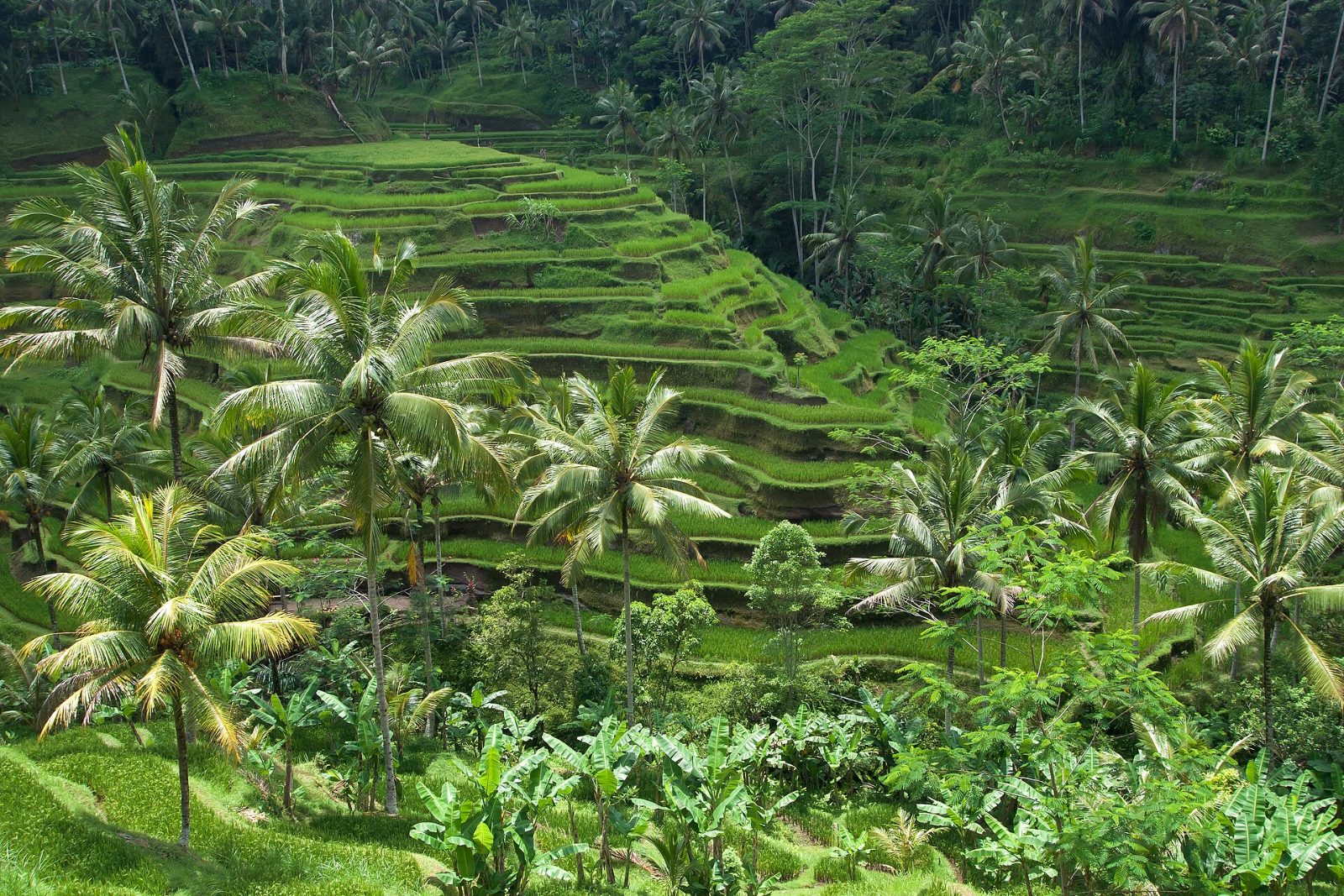
Bali is a single Indonesian island of about 5,700 square kilometres, Hindu in a mostly Muslim country, with a volcanic spine, terraced rice valleys, black-sand and white-sand coasts and a tourism industry that has been the island's main employer for decades. Ubud in the interior is the cultural and wellness centre; the southern peninsula holds the airport and almost all of the beach resorts; the east and north are quieter and further. Nusa Penida and the Gili Islands, though separate islands, appear on most itineraries.
It packages easily because it is cheap to reach from Australia and much of Asia, cheap to sleep in, and awkward to move around. Distances look small on the map, but traffic on the south's narrow roads turns 25 km into 90 minutes, and there is no rail and little useful public transport. That is why so many Bali packages are private-driver itineraries rather than group tours: the driver is the transport, the schedule and often the only guide. Flight-and-hotel bundles, honeymoon two-centre stays and yoga retreats are the other big formats.
The honest picture: Bali is busy, and the well-known sites are managed for volume. The 'gates of heaven' at Lempuyang have a queue system for the photograph; the terraces at Tegallalang are lined with swings and cafés; Kuta and Seminyak beaches are lively year round with strong currents and, in the wet season, plastic washed in by the swell. The dry season from April to October is reliable; December and January bring rain, humidity and holiday traffic. The island introduced a per-entry foreign tourist levy in 2024 and has published conduct rules for visitors, partly in response to bad behaviour on scooters and at temples.
Quieter versions of Bali exist: the valleys around Sidemen, the dive coast at Amed, the hills of Munduk in the north, Pemuteran in the north-west. The package decides which island you get, and the base town is the single biggest variable.
When to go
April to October (dry season). December and January are wet and busy with holiday traffic.
What a typical package looks like
5 to 10 day packages combining Ubud, the south coast and often Nusa Penida or the Gili Islands. Many are private-driver itineraries rather than group tours.
| Length | Shape |
|---|---|
| 4 to 5 night resort package | Flights, a hotel in Nusa Dua, Seminyak or Sanur, airport transfers and breakfast, with tours sold as optionals. Sold heavily from Australia and across Asia by airlines and online travel agents. It suits beach-and-pool holidays and anyone who plans to book day trips locally. |
| 7 to 10 day private-driver circuit | Two or three bases, typically Ubud plus a southern beach town, sometimes with a night in the east or north, and a car and driver for the sightseeing days. Sold by local agencies and by international specialists who subcontract to them. It suits couples and families who want the island's variety without a group. |
| 8 to 12 day small-group tour | A fixed departure with a tour leader, often extending to Nusa Penida, Lombok or the Gilis. Sold by adventure and small-group operators. It suits solo travellers and people who want company and a set plan, at the cost of flexibility over where to eat and how long to linger. |
| Retreat package, 5 to 7 nights | Yoga, surf or wellness programmes at a fixed venue with all meals and daily classes, mostly in Ubud, Canggu or Uluwatu. Sold by the venues themselves and by retreat aggregators. It suits people who want one place and a routine rather than a tour. |
What the price includes, and where money leaks
Bali's headline package prices look low because rooms and driving are inexpensive, and the exclusions are where the true cost lives. Most itineraries do not include temple entry fees, which are paid in cash at each gate and sometimes bundled with sarong hire; nor the fast-boat fares to Nusa Penida or the Gilis; nor the compulsory local guide for the Mount Batur sunrise trek; nor the tourist levy, which is paid online before arrival or at the airport. Hotels and restaurants add government tax and a service charge on top of listed prices, commonly written as 'plus plus', which surprises people on their first bill. Visa on arrival, for those nationalities that need it, is a separate fee paid at the airport.
The phrase 'private tour' needs unpacking. In Bali it often means a driver and car for the day, with the driver offering informal commentary; a licensed guide is a separate person and a separate cost. Drivers earn commission from certain restaurants, coffee plantations and silver shops, and an itinerary with several such stops is subsidising itself. Tips for drivers are customary. Single travellers face supplements on twin-priced packages, though Bali's abundance of small guesthouses makes solo pricing gentler here than in most destinations.
To compare quotes, put the hotel names side by side, count the driver days against the free days, and ask specifically which entry fees are covered. A package that says 'all entrance fees included' is doing something most do not, and a package that includes the Nusa Penida boat and a licensed guide is not comparable to one that includes neither, whatever the total says.
Getting there
Ngurah Rai International Airport sits on the isthmus between Kuta and Jimbaran, so a southern resort can be 20 minutes away while Ubud is an hour and a half and the north or east three hours or more. Almost every package includes the airport transfer, and in Bali that is worth having: taxi arrangements at the terminal confuse new arrivals. Nusa Penida is reached by fast boat from Sanur, the Gili Islands by fast boat from Padang Bai or Serangan or, more comfortably, via a flight to Lombok.
Escorted groups collect everyone on a set arrival day; private itineraries send a named driver with a sign. The thing packages most often get wrong is the first afternoon: a long-haul arrival followed immediately by a two-hour drive to Ubud in traffic is a rough start, and a night near the airport or in Sanur before moving inland is often kinder.
Where packages put you
Packages draw on resorts, villas and guesthouses. Nusa Dua is a gated resort enclave with calm, swimmable beaches, large international hotels and nothing much outside the gates; it is where flight-and-hotel bundles often land. Seminyak and Canggu have beach clubs, surf and restaurants, black-sand beaches with rip currents, and some of the island's worst traffic. Uluwatu sits on limestone cliffs with surf breaks below and long stair descents to the sand. Sanur is calm, reef-protected and older in feel. Ubud has no beach at all; its appeal is the rice terraces, the arts and the restaurants, and its centre is now as busy as any beach town.
A private-pool villa is Bali's signature accommodation and packages use villas heavily. On the ground a villa means privacy and space but also isolation: no restaurant, often no easy walking, and reliance on the driver or ride-hailing apps for every outing. A resort means facilities and a beach but a more anonymous stay. Family-run guesthouses, the traditional Balinese compound with a few rooms, are the cheapest and most personal option and are common on small-group tours. Ask how far a property is from the nearest town centre in minutes by car, not in kilometres.
Check these before paying a deposit
- Where you sleep: Ubud, Canggu, Seminyak and Uluwatu are 1 to 2 hours apart in traffic.
- Whether the 'private tour' includes a guide or only a driver.
- Entry fees and temple sarongs: often excluded and paid in cash.
- Fast-boat operators to the islands vary a lot in safety; ask which one.
Good for
Honeymoons Wellness and yoga Budget long stays
Skip it if
You expect quiet beaches in the south; Kuta and Seminyak are busy year round.
What to ask the operator
Ask the operator whether the itinerary includes a licensed guide or only a driver, and on which days. Ask which fast-boat company is used for Nusa Penida and the Gilis; standards vary widely and the crossing can be rough, especially in the afternoon. Ask how many hours of driving each sightseeing day involves, because an Ubud-based day that touches Lempuyang, Tirta Gangga and Besakih is a full day in the car. Ask whether the Mount Batur trek uses the local guide association, which is required, and whether the price covers it. Ask what happens to the plan on Nyepi, the day of silence in March, when the airport closes and nobody leaves their hotel.
Group size matters less in Bali than the number of vehicles: a small-group tour still moves as one convoy and stops where its leader stops. Private itineraries are usually subcontracted to a local agency and a freelance driver, and the international seller's role is the design and the guarantee, so ask who to call on the island if something goes wrong. Bali's provincial government publishes visitor rules on temple dress, sacred sites and scooter use, and a responsible operator will brief them rather than leave clients to learn at a temple gate.
Mistakes people make here
- Basing in Seminyak or Canggu and treating Ubud, the east and the north as day trips that all pass through the same jams.
- Expecting quiet, swimmable beaches in Kuta or Seminyak rather than in Nusa Dua or Sanur.
- Booking December or January for the beach and getting the wet season's rain and holiday crowds.
- Hiring a scooter without a licence or proper insurance and finding out at the roadside or the hospital.
- Cramming four Nusa Penida viewpoints into a single day trip with a rough crossing at each end.
- Turning up at temples without a sarong or cash for the entry fee.
- Assuming a 'private tour' comes with someone who can explain what you are looking at.
Where to compare packages for Bali
For multi-day packages, start with a marketplace to see the field, then check the operator's own site for price and terms. For day tours inside a trip you have planned yourself, use an activity marketplace.
| Use | Where | Why |
|---|---|---|
| Multi-day packages | TourRadar, G Adventures, Intrepid Travel | Widest catalogue first, then two operators that run their own trips. |
| Day tours and tickets | Viator, GetYourGuide, Klook | Fill free days; check the free-cancellation window on each listing. |
Frequently asked questions
How many days are enough for Bali?
A week covers Ubud and one coast comfortably; ten days add the east or Nusa Penida. Five nights in a single resort is a beach holiday rather than a tour of the island. Package lengths from four nights to two weeks are all sold, and the base towns matter more than the count.
Is Bali safe for a package holiday?
Broadly yes. The real risks are traffic and scooter accidents, strong surf on the southern beaches, and occasional rough fast-boat crossings. Petty theft occurs in the busy south. Volcanic activity is monitored and rarely affects visitors, though ash from eruptions has closed the airport in some years.
Do I need a visa for Bali?
Many nationalities can obtain a visa on arrival for a 30-day stay, extendable once, for a fee; some are visa-free and others must apply in advance. Rules change, so check the Indonesian immigration site before travel. Separately, all foreign visitors are asked to pay the Bali tourist levy on each entry.
Ubud or the beach?
Both, if the trip is a week or more. Ubud gives the rice terraces, temples and arts and a calmer evening; the south gives sand, surf and nightlife. The classic honeymoon package splits the stay between them, usually inland first and beach last.
What is the weather like in Bali?
Tropical year round, with a dry season from roughly April to October and a wet season from November to March. Wet-season rain often comes as afternoon downpours rather than all-day grey, but humidity is high and some beaches collect debris. July and August are the busiest dry months.
Is Nusa Penida worth a day trip?
The cliffs at Kelingking and the coast around Crystal Bay are spectacular and the day trip is enormously popular, which is the problem: the sites are crowded, the island's roads are rough and steep, and the boat both ways adds fatigue. An overnight stay, which some packages offer, is far more pleasant.
From operator itineraries, official tourism and park authorities, and published traveller reports. Nobody on the team is claiming a trip they did not take. Prices are deliberately left out because they change weekly; check the operator page on the day.