Angkor, Cambodia: what a package should include
The honest picture
Angkor is the site of the Khmer Empire's successive capitals between roughly the ninth and fifteenth centuries, spread over an archaeological park of some 400 square kilometres just north of Siem Reap in north-west Cambodia. Angkor Wat itself, the largest religious monument in the world, is one temple among dozens: Angkor Thom with the faces of the Bayon, the tree-strangled Ta Prohm, the carved pink sandstone of Banteay Srei, and outlying sites such as Beng Mealea and the Roluos group. The park was inscribed by UNESCO in 1992 and is managed by the APSARA National Authority, with tickets sold through a separate state enterprise.
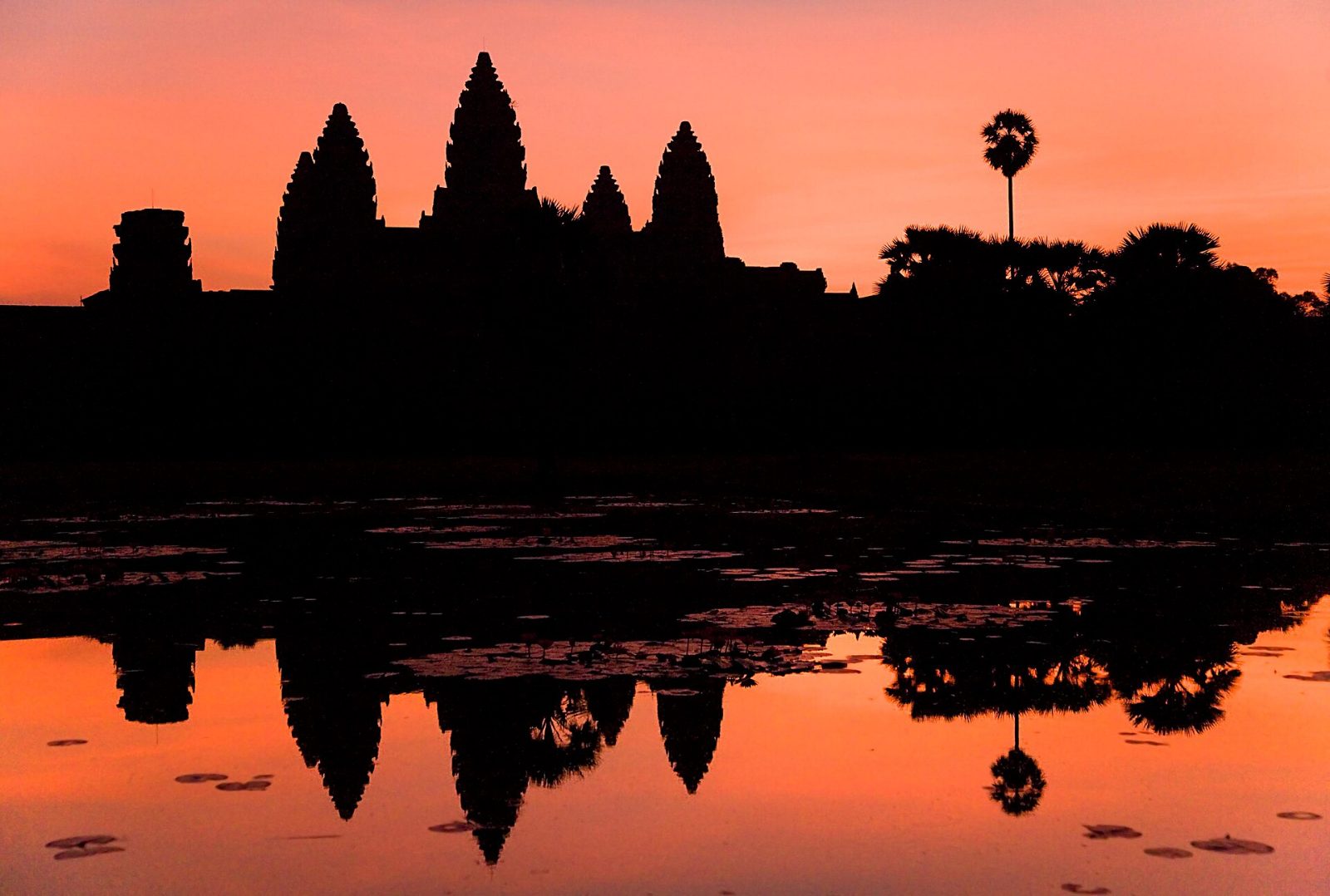
It is packaged because the temples are big, spread out and, without context, easy to walk through without understanding. A guide, a vehicle and an order of visiting are what turn a hot day of stairs into something coherent. Almost every Indochina itinerary that touches Cambodia gives Angkor two to three days, and stand-alone Siem Reap packages of two to four nights are sold from Bangkok, Ho Chi Minh City and Singapore and through online marketplaces. Sunrise over the towers of Angkor Wat is on practically all of them.
The honest picture: it is hot, the heat comes with humidity, and there is very little shade on the causeways and inside the temple courtyards. Stairs are steep; the upper tier of Angkor Wat has a queue and a dress code, and closes on certain religious days. Sunrise draws thousands to one reflecting pool. Siem Reap is a comfortable, well-served town, but the park is not: water, hats and an afternoon break matter more than on most city tours. The wet season, June to October, is quieter and green, with heavier rain in the afternoons and occasionally flooded tracks to the outlying temples.
The pass is multi-day, personal and bought in Siem Reap, and many packages leave it out of the price. Whether it is in or out is the first question to ask, and the second is how many temples the operator is trying to fit into each day.
When to go
November to February is dry and cooler. March to May is brutally hot; June to October is wet but green and far quieter.
What a typical package looks like
2 to 3 days from Siem Reap, either as a stand-alone trip or 3 to 4 nights on a 12 to 16 day Vietnam-Cambodia or Thailand-Cambodia package. Sunrise at Angkor Wat is on almost every itinerary.
| Length | Shape |
|---|---|
| 2 nights (stand-alone) | Arrive, a first afternoon at Angkor Wat or the Bayon, a sunrise morning with the small circuit (Angkor Wat, Angkor Thom, Ta Prohm), an afternoon break, then the grand circuit or Banteay Srei on the last day before a flight out. Sold from Bangkok and Vietnam as a short break, and by online marketplaces as a set of day tours. Suits time-poor travellers who accept a compressed pace. |
| 3 to 4 nights (on an Indochina package) | The Cambodian chapter of a 12 to 16 day Vietnam and Cambodia or Thailand and Cambodia group tour. Usually two full temple days with a licensed guide, a Tonle Sap boat trip or a countryside excursion, and free time in Siem Reap. Suits most first-time visitors; the pace is manageable and the rest of the trip absorbs the travel days. |
| 4 to 5 nights (deeper Angkor) | Adds the outlying sites: Banteay Srei and the Kbal Spean riverbed carvings, Beng Mealea, sometimes Koh Ker, plus the Roluos group and a museum visit. Sold by specialist operators and as private itineraries. Suits history and architecture travellers and photographers who want the quiet temples. |
| Day trip by air | Fly in early from Bangkok or Ho Chi Minh City, a car and guide for the small circuit, fly out at night. Sold by a handful of operators and rarely satisfying; the heat and the flight times leave only a few hours on site. |
What the price includes, and where money leaks
The headline price usually covers the hotel with breakfast, a licensed guide, a vehicle for the temple days, and airport transfers. The Angkor pass is the item to check. It is sold in one-day, three-day and seven-day versions, the longer passes valid across a window of days rather than consecutive ones, bought at the official ticket centre on the edge of town with a photograph taken at the counter, and carried and shown at every temple. Its price is set by the Cambodian government and has been stable for some years, but operators frequently exclude it, either to keep the headline low or because the pass is personal and cannot be bought in advance by a third party. A quote that includes it is worth noticeably more than one that does not.
Other leaks: guide and driver tips, which are expected; lunches inside the park, where the restaurants near the main temples are expensive by Cambodian standards; the sunrise breakfast box; separate tickets for Koh Ker and for some sites outside the main park boundary; the Tonle Sap boat trip, which most packages sell as an optional and which varies in quality with the water level; the circus, the night markets and cooking classes. The Cambodian visa, obtained on arrival or online, sits outside every package. Single supplements apply on group departures.
When comparing quotes, count temple days rather than nights, check whether the guide is a licensed Angkor guide or the tour leader, ask whether the vehicle is a remork (the local motorbike-drawn carriage), an air-conditioned car or a coach, and check whether the pass is included. Two nights with one temple day is a very different product from three nights with two.
Getting there
Siem Reap-Angkor International Airport, which opened in late 2023 some 40 to 50 km east of town and replaced the old airport near the temples, is the gateway, with flights from Bangkok, Singapore, Kuala Lumpur, Hanoi, Ho Chi Minh City and other regional hubs. The transfer to Siem Reap now takes around an hour, and packages include it. Overland alternatives exist: the road from Phnom Penh takes six hours or so by bus, and the crossing from Thailand at Poipet is possible but slow, with a long history of ticket and visa scams that group packages avoid by using their own transport. A seasonal boat runs from Phnom Penh and from Battambang when the water is high enough.
Within the park, distances are real. Angkor Wat is about 6 km from town, Banteay Srei roughly 35 km, Beng Mealea further still. A package's vehicle choice sets how much of the day is spent moving: a remork is open, slow and pleasant in the cool of the morning; an air-conditioned car matters in the afternoon.
Where packages put you
Siem Reap has hotels at every level, and packages use three broad areas. The centre around the Old Market and Wat Bo road has boutique hotels and guesthouses within walking distance of restaurants and the night markets, which suits travellers who want evenings on foot. The road towards the park, north of the river, has the large resort hotels with big pools and gardens, quieter and a short drive from both town and temples. Further out, along the airport road and Sok San Road, are the hotels that budget coach packages tend to use, comfortable but reliant on the bus.
The pool is not a luxury here. Most itineraries break between midday and mid afternoon precisely because the park is punishing then, and the difference between a hotel where that break is pleasant and one where it is a hot room with a fan is the difference between finishing the day and giving up on it. Check the star level and the pool, not just the name.
Check these before paying a deposit
- Whether the Angkor pass is included. It is a multi-day pass bought in Siem Reap and often excluded from the tour price.
- How many temples per day. Three big sites in one hot day is a lot; itineraries that cram in seven are counting drive-bys.
- Whether the guide is a licensed Angkor guide (they wear an official badge) or the tour leader improvising.
- Start times. A 4:30am sunrise pick-up followed by a full day means a 5pm finish; ask for the afternoon break.
Good for
History and architecture Photographers Combining with Vietnam or Thailand
Skip it if
Heat and long days on foot are a problem; there is little shade and a lot of stairs.
What to ask the operator
Ask whether the guide holds an official Angkor guide licence, issued after training approved by the APSARA authority and the Cambodian tourism ministry; licensed guides wear a badge with their photograph, and only they may guide inside the park. Ask which languages the guide works in, how many people they take, and whether the same guide stays with the group across all the temple days. Ask about the itinerary's order: operators who run the small circuit backwards, or who put Ta Prohm at opening time and Angkor Wat in the late afternoon when the crowds thin, know the park well. Ask whether the sunrise is at Angkor Wat itself, which is crowded, or at an alternative such as Srah Srang.
Group size is felt on the stairs and in the narrow galleries. Twelve people can be shown a bas-relief; forty stand in a line. Ask the maximum, and ask whether the vehicle is a coach or a set of remorks. Drones are prohibited in the park without a permit and the dress code (shoulders and knees covered) is enforced at Angkor Wat's upper level and some other temples; an operator should say so in the pre-departure notes. Finally, ask how the operator handles a traveller who cannot manage the stairs: a good answer includes which temples are level and which are not.
Mistakes people make here
- Assuming the Angkor pass is included because the temples are on the itinerary.
- Buying the one-day pass for a two-day visit; the three-day pass is the sensible unit and is valid across a longer window.
- Doing sunrise, the small circuit and the grand circuit in one day in April, then being too exhausted to see anything on day two.
- Arriving in shorts and a vest and being turned away from Angkor Wat's upper tier.
- Leaving the visa to the airport queue after a late flight without checking the online option first.
- Taking the first Tonle Sap tour offered in the dry season, when the lake has shrunk and the 'floating village' is a long boat ride through mud.
- Treating Siem Reap as a stopover town; its markets, museum and countryside are worth a free afternoon.
Where to compare packages for Angkor Wat
For multi-day packages, start with a marketplace to see the field, then check the operator's own site for price and terms. For day tours inside a trip you have planned yourself, use an activity marketplace.
| Use | Where | Why |
|---|---|---|
| Multi-day packages | TourRadar, G Adventures, Intrepid Travel | Widest catalogue first, then two operators that run their own trips. |
| Day tours and tickets | Viator, GetYourGuide, Klook | Fill free days; check the free-cancellation window on each listing. |
Frequently asked questions
Is the Angkor pass included in tours?
Often not. The pass is personal, bought at the official ticket office in Siem Reap with your photograph taken on the spot, and sold in one-, three- and seven-day versions. Some operators include it and take you to the office on arrival; many exclude it and expect you to pay there by cash or card. Ask before you book.
How many days do you need at Angkor?
Two full temple days is the sensible minimum: one for Angkor Wat, Angkor Thom and Ta Prohm, one for the grand circuit or Banteay Srei. A third day for Beng Mealea, Koh Ker or the Roluos group rewards anyone with a real interest. One day is possible but leaves you with a list of names.
Is sunrise at Angkor Wat worth it?
It is the most famous view and it is crowded, with several thousand people around the northern reflecting pool in high season. Most packages include it and it is still striking; anyone who dislikes crowds can ask for a sunrise elsewhere in the park and visit Angkor Wat in the late afternoon instead.
What is the dress code?
Shoulders and knees covered for everyone, enforced at the entrance to Angkor Wat's upper tier and at some other temples. Light long trousers or a long skirt and a T-shirt with sleeves are fine; scarves draped over shoulders are sometimes refused.
When is the best time to visit Angkor?
November to February for dry, cooler weather and the biggest crowds; June to October for green landscapes, higher water on the Tonle Sap and far fewer people, with afternoon rain. March to May is very hot and best avoided unless dates are fixed.
Can you get around Angkor without a guide?
Yes, by hiring a remork driver for the day, and many independent travellers do. The temples lose a great deal without explanation, however, and a licensed guide for at least the first day is the single most useful thing a package buys here.
From operator itineraries, official tourism and park authorities, and published traveller reports. Nobody on the team is claiming a trip they did not take. Prices are deliberately left out because they change weekly; check the operator page on the day.