Travel Insurance for Package Tours: What the Operator's Cover Does Not Include
Most operators require travel insurance as a condition of booking, and many customers assume the operator's own cover, or the free policy on a credit card, has it handled. Usually it does not, and the gaps cluster around what goes wrong on organised tours.
What the operators actually require
Three operators publish a figure or a condition, read November 3, 2026.
Intrepid's clause 16 makes insurance mandatory and recommends a minimum of US$200,000 each for personal accident, death, medical expenses and emergency repatriation.
G Adventures goes further and requires it. Its USA Booking Terms demand minimum medical, evacuation and repatriation coverage of US$200,000.
Exodus clause 4.4 calls adequate and valid insurance compulsory and a condition of accepting the booking. Clause 4.5 says you must carry proof of it.
Intrepid also wants the policy number and the insurer's 24-hour emergency number on day one, and says "you will not be able to join the trip without these details."
Operator liability is not your insurance
A licensed operator carries liability insurance. It responds when the operator or its suppliers are at fault: a vehicle accident caused by the driver, an injury from faulty equipment, a hotel that was never booked.
It does not respond when you fall ill, when a family member at home is taken to hospital, when a flight you booked separately is cancelled, or when a volcano closes an airport.
Those are your risks, and they are what a personal travel policy exists to cover.
Package travel rules in several jurisdictions also protect customers if the operator itself fails. That is protection against the operator's failure, not against yours.
EU Directive 2015/2302 article 17 requires organisers to provide security for the refund of all payments, and for repatriation where the package includes carriage of passengers.
In the UK the CAA's ATOL scheme covers package trips that include a flight. Its page states that ATOL "is financial protection when you book a package trip that includes a flight. It is not travel insurance."
In the US, USTOA Active Members post a US$1 million security. USTOA says the programme protects consumers "for up to $1,000,000 in the aggregate" and warns that on a large insolvency it "may not cover all losses".
Asked whether the programme covers you if you decide to cancel, USTOA answers: "No."
Cancellation cover: standard versus 'any reason'
The package payment timeline, with a non-refundable deposit and a balance that becomes largely non-refundable some weeks before departure, is why cancellation cover matters more on tours than on independent trips.
Standard cancellation cover pays out only for listed reasons: typically illness or injury of the traveller or a close relative, death, jury service, redundancy, or a home emergency.
It does not pay because you changed your mind, because a travelling companion pulled out for an uncovered reason, or because you became worried about the destination.
Cancel-for-any-reason cover is an optional extension sold in some markets, and the terms are tighter than the name suggests.
Allianz's Cancel Anytime upgrade is one published example. It reimburses 80 percent of unused, pre-paid, non-refundable trip costs. You must insure the full trip cost within 14 days of your first deposit, and the trip must start at least 30 days out.
It is not offered in every US state. Whether the higher premium is worth it depends on how much of your tour cost is non-refundable - a calculation you can run on the actual terms.
- List every non-refundable amount: deposit, balance, internal flights bought separately, permits.
- Check the policy's cancellation limit covers that total, not just the tour price.
- Read the list of covered reasons, and note what is excluded (known events, pandemics, travel advice changes).
- If a cancel-for-any-reason option exists, note its purchase deadline.
Medical evacuation: the expensive line
Medical treatment abroad is one cost; getting a patient from a remote area to a hospital that can treat them is another, and it is the one that produces the largest claims.
A helicopter from a mountain trail, an air ambulance from an island, or a repatriation flight with a medical escort can run to sums that dwarf the cost of the tour.
Standard policies include evacuation cover, but the limit varies widely, and some cheaper policies set it low enough to be nearly useless in the destinations where evacuation is most likely to be needed.
Check three things: the evacuation limit, whether the insurer or the traveller decides that evacuation is medically necessary, and whether the policy covers evacuation from remote areas at all. Some policies exclude regions above a certain altitude or beyond a certain distance from a road.
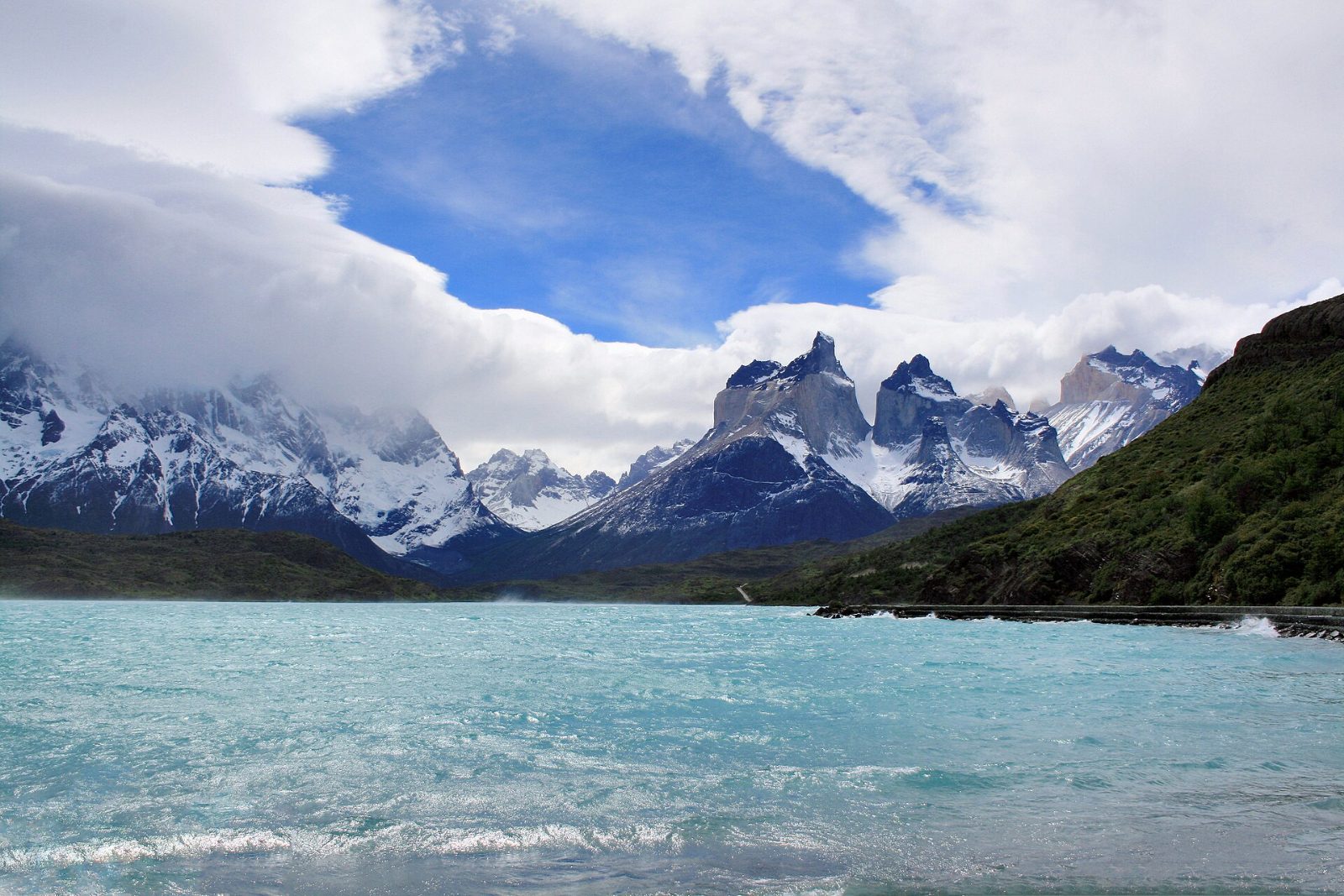
Package tours to Patagonia, the Andes, the Himalaya and East Africa routinely spend days in exactly those places.
Altitude and adventure exclusions
This is the gap that catches package tour customers most often. Many standard policies exclude trekking above a stated altitude, and that altitude is sometimes lower than the highest point of a mainstream itinerary.
A tour through the Peruvian highlands, a Bolivian salt flat crossing or a Himalayan trek can exceed it without any climbing involved.
Other activities commonly listed as exclusions or requiring an add-on include white-water rafting, scuba diving beyond a depth, canyoning, quad biking, hot-air ballooning, motorcycle travel and glacier walking. Several of these appear as 'optional activities' on ordinary itineraries.
Exodus puts the warning in its own conditions. Clause 4.5 tells travellers to "ensure that there are no exclusion clauses which limit cover for the type of activities included, or the altitudes attained, in your tour."
- Find the maximum altitude on the itinerary and compare it with the policy's altitude limit.
- Go through the optional activities list and check each against the policy's activities schedule.
- Where an add-on is needed, buy it before departure; it usually cannot be added from abroad.
- Note any requirement that activities be run by a licensed operator, which is one reason to book optionals through the tour leader rather than off the street.
Pre-existing conditions
Insurers ask about existing medical conditions at purchase, and a condition not declared is a common reason for a claim to be refused, even when the claim is for something unrelated on the surface.
The definition of a pre-existing condition is broad in many policies and can include conditions under investigation, recent changes to medication and conditions of close relatives whose illness might cause cancellation. Declaring costs time and sometimes a higher premium; not declaring can void the policy.
Exodus states the same duty plainly. Clause 4.5 of its US-edition conditions says it is your responsibility "to declare any material facts including known medical conditions to your insurers, as failure to do so may result in a claim being reduced or declined."
This is health-adjacent territory, and the right course is to read the medical declaration section of the policy wording carefully and, where anything is unclear, to ask the insurer in writing and keep the answer.
For questions about fitness to travel or to undertake a specific activity, a doctor is the person to consult, not an insurer and not this article.
Card insurance and its limits
Complimentary travel insurance attached to a credit card or bank account is real, but it is usually narrower than a purchased policy.
Common limits include cover only when the trip was paid for with the card, partly or wholly depending on the terms. Also an upper age limit, short maximum trip durations, and lower medical and evacuation limits.
Others exclude pre-existing conditions with no option to declare them, or carry restrictive activity lists.
Some card policies also require activation before each trip.
Card cover can be adequate for a short, low-risk trip.
For a multi-week tour with altitude, remote sections or significant non-refundable costs, it should be checked line by line against the same list as any other policy, and topped up or replaced where it falls short.
How claims actually work
A claim is a paperwork exercise, and the paperwork has to be collected at the time, in the country, when it is least convenient.
Insurers generally expect a medical report from the treating doctor, itemised receipts, and proof that the assistance line was contacted before significant treatment or evacuation.
For lost or stolen property: a police report, filed within whatever period the policy sets, and proof of ownership. Policies differ on that deadline and this note has no figure that covers all of them.
For cancellation: evidence for the reason, plus the operator's written confirmation of what was refunded and what was not.
- Save the insurer's 24-hour assistance number in the phone and on paper before departure. Intrepid requires that number and your policy number on day one of the trip.
- Call the assistance line before arranging hospital admission or evacuation; policies usually require pre-authorisation for large costs.
- Keep every receipt and every document, however minor, in one envelope.
- Note the claims deadline; many policies require notification within a set number of days of returning home.
- Ask the tour leader for a written incident note; operators are used to providing them.
The other point that surprises people is that most policies pay you back rather than paying the provider directly, except for large hospital bills where the insurer may arrange a guarantee of payment.
Expect to fund smaller costs yourself and claim them afterwards, which is another reason to carry an accessible reserve of money.
When to buy: before the deposit clears
Cancellation cover starts when the policy starts. A policy bought a week before departure covers a cancellation that week, but not one caused by an illness diagnosed the month before.
Since the deposit is usually non-refundable from the day it is paid, the sensible time to buy is on the same day as the deposit, or as close to it as possible.
Any cancel-for-any-reason option and any pre-existing condition waiver typically depend on buying within a short window of that first payment.
For travellers who take more than one trip a year, an annual multi-trip policy bought at the start of the year achieves the same thing without a separate purchase each time, subject to its per-trip duration limit, which may be shorter than a long tour.
A checklist for a package tour policy
- Cancellation limit at least equal to total non-refundable costs.
- Medical and evacuation limits appropriate to the remoteness of the route.
- Altitude limit above the itinerary's highest point.
- All planned and optional activities within the covered list or added on.
- Pre-existing conditions declared and accepted in writing.
- Policy start date on or before the deposit date.
- Trip duration limit covering the whole tour plus travel days.
- Assistance line number saved and the claims process understood.
None of this is a substitute for the policy wording. Policies differ, the same words mean different things in different documents, and the only version that counts in a claim is the one you signed.
Read it, ask the insurer about anything unclear, and consult a qualified professional for questions about health, fitness to travel or which product suits your circumstances.
Sources
- Intrepid Travel - Standard Booking Conditions, clause 16 (Travel Insurance) – checked 2026-11-03
- G Adventures - USA Booking Terms (travel insurance requirement, US$200,000 minimum) – checked 2026-11-03
- Exodus Adventure Travels - Booking Conditions, US edition, clauses 4.4 and 4.5 – checked 2026-11-03
- UK Civil Aviation Authority - What is ATOL protection? – checked 2026-11-03
- USTOA - $1 Million Travelers Assistance Program – checked 2026-11-03
- EUR-Lex - Directive (EU) 2015/2302 on package travel, article 17 – checked 2026-11-03
- Allianz Travel Insurance - Cancel Anytime – checked 2026-11-03