Packing for a Package Tour: What the Operator's List Leaves Off
Most operators email a packing list a few weeks before departure. It is written for the whole year and the whole range of customers, so it is long, generic and silent on the things that actually cause trouble on the road. This is a guide to reading that list critically and filling in what it leaves out.
Start with the luggage limit, not the list
The single most useful number in the pre-departure pack is the luggage allowance, and it is often buried. Small-group tours travel in minibuses and vans with a roof rack or a rear compartment sized for the group. Operators typically ask for one soft-sided bag per person within a stated weight, plus a daypack. A hard-shell suitcase that does not compress can genuinely fail to fit, and the person who brought it is the one who ends up holding it on their knees.
Domestic flights inside the itinerary are the other constraint. Regional carriers in South America, East Africa and Southeast Asia often run lower checked and cabin allowances than the long-haul airline that brought you in, and small aircraft into bush strips or mountain towns can restrict luggage to soft bags of a fixed weight. The operator's list usually mentions this in one line. Read that line twice, because the excess baggage fee at a regional check-in desk is paid in cash, on the spot, with the group waiting.
- Find the stated bag limit for the vehicle and for every internal flight in the itinerary.
- Pack to the lowest of those numbers, not the international allowance.
- Choose a soft duffel or a soft-sided wheeled bag over a hard case unless the tour is coach-only.
- Weigh the packed bag at home; most household scales are good enough.
Laundry: what the itinerary does not say
The reason a two-week tour does not need two weeks of clothes is laundry, and the reason people pack two weeks anyway is that they do not know when laundry will be possible. The answer is usually visible in the itinerary if you look for it. Any city with two or more consecutive nights almost always has a same-day laundry service near the hotel, or a hotel service that returns clothes the next morning. Single-night stops, camps, trains and boats generally do not.
A practical approach is to count the two-night stops and plan to wash at each one. In many countries a laundry by the kilo is inexpensive and quick; in others, particularly in Northern Europe and Japan, hotel laundry is slow or costly and a coin launderette is the realistic option. For the gaps, a small bar of travel soap or a few sachets of detergent, a universal sink plug and a length of cord cover underwear and a shirt overnight. Quick-drying fabrics matter more than most lists suggest, because in a humid climate cotton simply does not dry by morning.
One trip, three climates
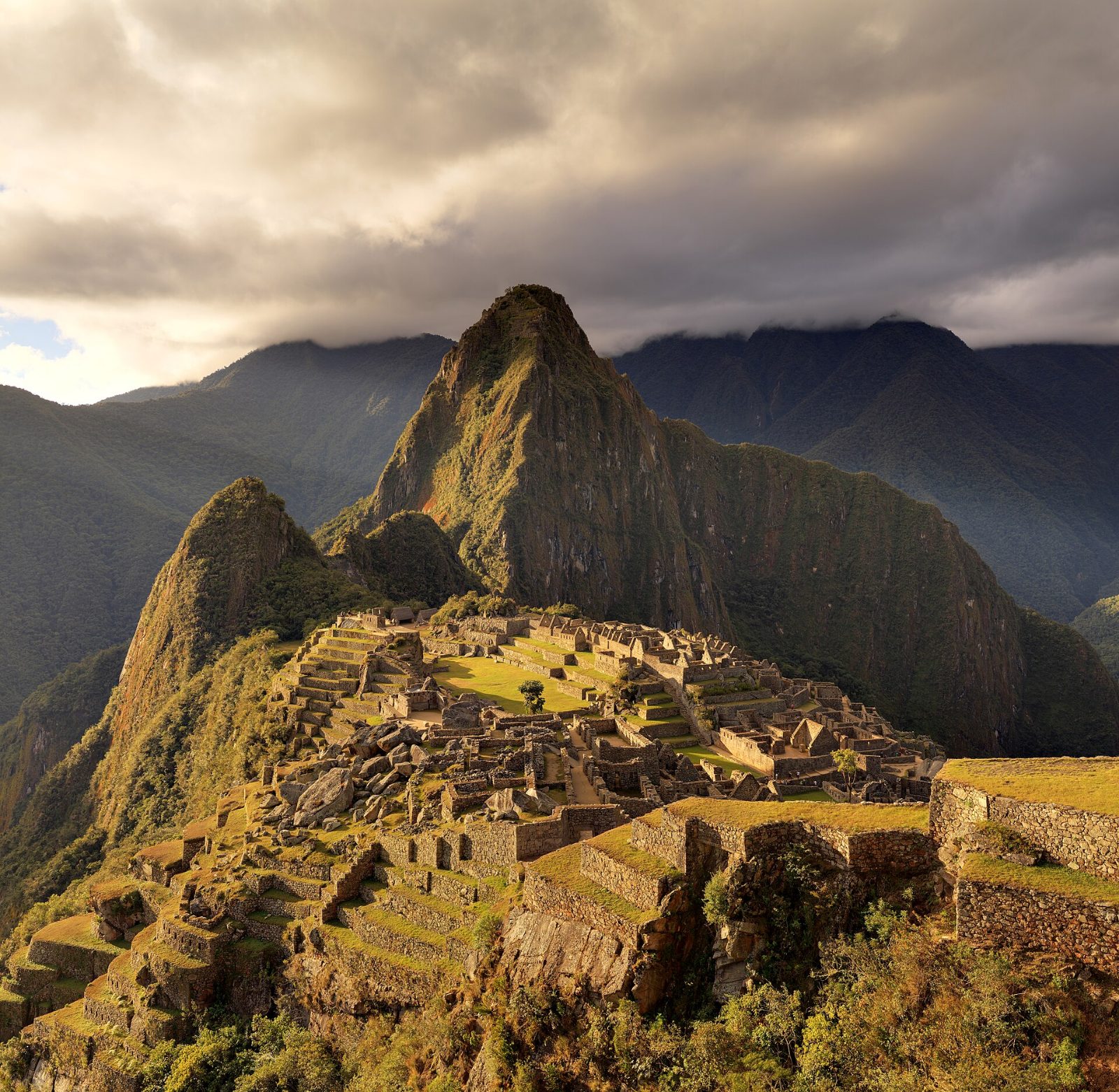
Many of the most popular packages cross several climates in a fortnight. A Peru itinerary can go from sea level in Lima to cold nights above 3,000 metres, then down into humid cloud forest. A north-to-south Vietnam trip runs from a chilly Hanoi winter to a hot Mekong Delta. Morocco can be freezing in the mountains and hot on the same afternoon in the valley. The operator's list, written for the whole year, tends to solve this by listing everything, which is how people end up with a full bag before adding anything for the destination.
Layering solves most of it. The usual pattern is a light base layer, a mid layer for warmth (fleece or a light insulated jacket), and a thin shell that stops wind and rain. Together they handle most conditions a package tour will put you in; individually they cover the rest. The pieces to avoid are single-purpose bulk items: a heavy coat that is only right for two days, or a second pair of boots. One pair of comfortable walking shoes already worn in and one lighter pair for evenings and hot days is the usual balance, and it is worth remembering that shoes are the heaviest single item most travellers carry.
- Check the altitude and the month for each stop, not just the country.
- Pack for the coldest night with layers, not with one heavy garment.
- A compact rain shell earns its place on almost every itinerary.
- Sun protection (hat, sunglasses, sunscreen) is needed at altitude even when the air is cold.
What to leave at home
The list operators send rarely says what not to bring, and this is where most weight is saved. A few categories come up repeatedly on group tours.
- Full-size toiletries. Hotels on most packages provide the basics, and anything else can be bought locally in travel sizes.
- A 'just in case' outfit for an occasion the itinerary does not include. If there is no formal dinner in the schedule, there is no formal dinner.
- Multiple guidebooks. The tour leader and local guides replace most of what a guidebook does; a phone with offline maps does the rest.
- Large quantities of snacks. Nearly every route passes shops daily, and local snacks are part of the trip.
- Expensive jewellery and anything you would be upset to lose. Group tours involve many hotels, many vehicles and many chances to leave something behind.
- A second big camera body or lens set unless photography is the purpose of the trip.
It is also worth checking the itinerary for items the operator provides. Sleeping bags on trekking trips, hire of trekking poles, mosquito nets in lodges, life jackets on boats and towels at hostels are commonly included or hireable on the ground, and the list often says so in a footnote that gets skipped.
Documents: the copies matter more than the originals
Passports, visas and vaccination certificates are on every list. What is less often stated is how to hold copies, and copies are what get you out of trouble. A lost passport is far quicker to replace at a consulate with a copy of the photo page in hand. A photograph of the visa sticker or e-visa approval settles arguments at a domestic airport. A copy of the tour voucher and the operator's emergency number, kept separately from the phone, is the fallback if the phone is lost.
- A paper copy of the passport photo page, kept somewhere other than with the passport.
- Digital copies of passport, visa, insurance certificate and vouchers stored in a cloud folder and also saved offline on the phone.
- The insurance policy number and the insurer's emergency line, written on paper.
- The operator's local emergency contact, not just the head office number.
- Two or three passport-style photographs for visas on arrival and permits, where the itinerary requires them.
Many countries expect travellers to carry the passport itself, or at minimum a copy, when moving around. The tour leader usually briefs on this at the first meeting; if not, ask.
The one-bag argument
There is a strong case for doing a package tour with a single cabin-sized bag, and it is not about minimalism. On a group tour luggage is loaded and unloaded every day or two, sometimes by you. Internal flights lose checked bags at a rate that matters over a fortnight of connections. Hotels in old towns are often a walk from where the vehicle can stop. Every one of these is easier with one bag that never leaves your side.
The counter-argument is real too: trekking trips need bulk, cold-climate routes need volume, and some travellers simply prefer more choice of clothes. A reasonable compromise is a soft bag that could go in the cabin on the outbound flight even if it is checked, with everything essential for the first two days (medication, a change of clothes, documents, chargers) in the daypack that stays with you.
The daypack is the bag you actually live in
On most days the main bag is in the vehicle from morning to evening. What goes in the daypack decides how the day goes. The usual contents are water, sun protection, a rain layer, any medication needed during the day, the phone and a battery, a small amount of cash in small notes, and the document copies. A daypack that is comfortable for a full day of walking is worth more attention than the choice of main bag.
A short checklist before you close the bag
- Packed to the lowest luggage limit on the itinerary, including internal flights?
- Laundry stops identified, and enough clothes to reach the first one?
- Layers cover the coldest night and the hottest day on the route?
- Copies of documents in two places, one of them not electronic?
- Everything needed for the first 48 hours in the daypack?
- Anything on the operator's list actually provided on the ground and therefore not needed?
The operator's list is a floor. Treat the luggage limit as the ceiling, and let the itinerary, not the list, decide what sits in between.